
Heat treatment for spring steel: Optimal temperatures and materials
Veröffentlicht: 2025 12 22
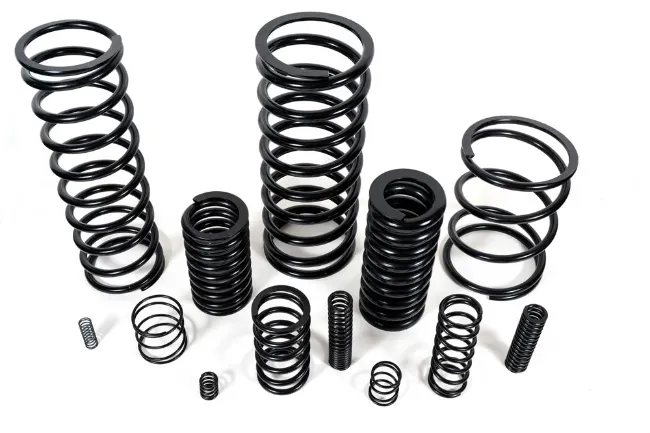
Heat treatment for spring steel shapes how steel behaves in real conditions. It strengthens the material, improves flexibility, and supports long service life. This guide takes you through the key stages of heat treatment and the temperature ranges used for common spring materials. You’ll see how different factors affect performance across applications, along with a clear comparison of cold and hot-coiled springs.
What is heat treatment for spring steel?
Heat treatment is a controlled thermal process to change the steel’s internal structure and improve its mechanical properties. The right cycle increases strength, stability, and fatigue life. It also helps springs deliver steady performance under demanding loads.
Key stages in the spring heat treatment process
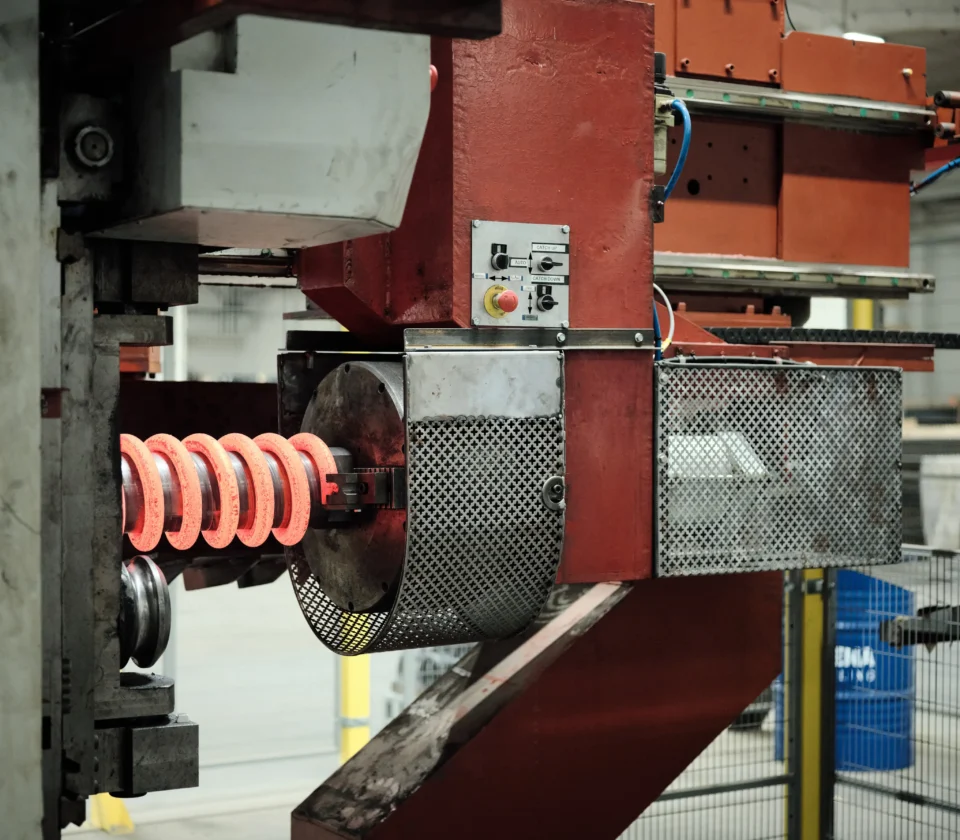
Heating to the austenitizing range
Austenitizing prepares the steel for transformation, heating the material until the internal structure becomes uniform and ready to harden. Each steel grade has a narrow temperature window that supports this change, and consistent furnace control ensures even results across the entire batch.
Quenching for hardness
Quenching is the fast-cooling stage that fixes hardness into the steel. During quenching, a hot spring steel is immersed directly into a bath of quenching oil (the standard medium), offering controlled cooling with minimal distortion. Water and polymer solutions are used for alloys that need a sharper temperature drop and a harder finish. Ultimately, the method is chosen according to the steel grade and the performance required.
Tempering for flexibility and toughness
Tempering follows quenching. This step reheats the steel at a lower temperature to reduce brittleness. It helps strike the right balance between strength and flexibility. Accurate tempering supports repeatable load performance and long-term durability.
Stress relieving
Stress relieving removes residual stresses created during coiling or forming. During this process, finished or partially formed springs are heated to a lower temperature than complete hardening or tempering. Typically, this is a few hundred degrees Celsius, depending on the material. It uses lower temperatures to relax the material without major changes to hardness, and after a controlled soak time, the spring is cooled gradually in air. This supports fatigue resistance and stabilizes the final part.
Optimal temperatures for common spring materials
High-carbon spring steel
High-carbon grades respond well to traditional heating cycles. They provide strong fatigue life and reliable strength. Typical ranges include 1790 to 870°C for austenitizing, oil quenching, and 370 to 480°C for tempering.
Alloy steel springs
Chrome-silicon and chrome-vanadium alloys support higher loads and tolerate more heat and stress cycles. Many alloy steels are heated to 815 to 900°C during austenitizing, and then cooled in oil or polymer solutions to set the final structure. Tempering for these materials often falls between 370 and 540°C.
Stainless steel springs
Stainless grades behave differently during heat treatment. Many rely on controlled atmospheres and air cooling to protect surface quality. They also offer natural corrosion resistance and stable fatigue performance. Tempering ranges vary by grade but often sit between 400 and 595°C.
Spring performance factors affected by heat treatment
Hardness and toughness
Heating and cooling change hardness levels. The right cycle creates material that can handle loads without cracking.
Fatigue resistance
A precise microstructure supports longer spring life. Stable heat treatment reduces internal stress and delays fatigue failure.
Elastic limit and stability
Tempering helps springs return to their original shape under repeated loading. This supports predictable performance.
Comparing processes in spring manufacturing
Cold coiling and post-process heat treatment
Cold-coiled springs need heat treatment to remove forming stress and stabilize the part. Learn more in our cold coiling vs hot coiling guide.
Hot coiling and integrated heat cycles
Hot-coiled springs use high temperatures during forming. They still need controlled cooling and tempering to refine the final properties.
Grid of spring materials and typical temperature ranges
Spring Material
Austenitizing range
Quenching medium
Tempering range & other notes
High-carbon spring steel (e.g., 1075–1095)
790–870°C
Oil
370–480°C
*High strength and good fatigue life
Alloy spring steel (e.g., chrome-silicon, chrome-vanadium)
815–900°C
Oil or polymer
370–540°C
*Supports higher loads and stress cycles
Stainless steel (e.g., 17-7PH, 301)
Varies by grade
Air or controlled atmosphere
400–595°C
*Strong corrosion resistance and stable performance
Music wire
Pre-hardened; stress-relief only
Air
230–315°C
*Excellent strength; used after cold forming
Inconel and high-temperature alloys
Proprietary ranges
Air
480–650°C
*Suitable for extreme heat or corrosive setting
When to optimize or adjust the heat treatment cycle
Application temperature needs
High-heat environments may need adjusted cycles. This prevents loss of hardness or stability during service.
Load, speed, and fatigue demands
Automotive, aerospace, and industrial parts often need customized cycles. These settings support higher speeds and long duty cycles.
Preventing decarburization and scaling
Clean, controlled atmospheres protect surface quality. This helps maintain strength and reduces finishing steps.

Improve your spring performance with specialist support
Lesjöfors offers a full range of manufacturing technologies and material expertise, from precision coiling to controlled heat treatment at scale. Our teams work with austenitising, quenching, tempering and stress relieving to achieve the exact balance of hardness, flexibility and fatigue resistance your application demands.
Whether you need guidance on material grade, temperature profiles or performance trade-offs, we’ll help engineer a spring that lasts. Explore our capabilities or get in touch for advice shaped around your requirements.