
Stainless steel springs: What’s the best material grade?
Veröffentlicht: 2025 01 01
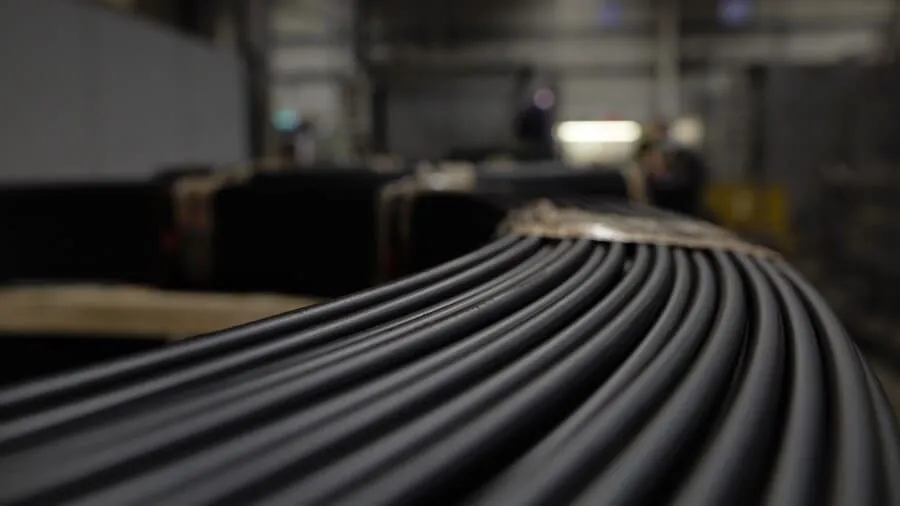
Did you know that there are over 150 types of stainless steel? With so many options available, choosing the best grade for your stainless steel spring solutions can be challenging. In this post, you will learn about stainless steel, its use in heavy-duty springs, and the various types and grades for your custom spring needs. At Lesjöfors, we use various spring materials, including stainless steel. We also hold one of the largest stocks of chrome silicon and chrome vanadium wire worldwide, with an expert team of metallurgists and quality engineers who can help you choose the right material at the right price. So, firstly, what is stainless steel? And why is it used to manufacture springs?
What is stainless steel?
Stainless steel is a corrosion-resistant iron alloy with at least 10.5% chromium. It has a thin layer of chromium oxide on its surface, which adds a protective layer, increases durability and prevents rusting. In some cases, stainless steel may include other alloys, such as nickel, molybdenum, and carbon, to enhance strength and resistance to heat or chemicals. It is commonly used in springs due to its strength, flexibility, and corrosion resistance.
Stainless steel properties
Stainless steel has many valuable properties, which make it ideal for applications where springs are exposed to harsh environments, such as high stress, extreme temperatures, moisture, or corrosive chemicals. These properties include:
- Strength & durability
- Corrosion resistance
- Flexibility & formability
- Oxidation resistance
- High-temperature resistance
- Magnetic & non-magnetic options
- Fatigue resistance
- Low maintenance
- 100% recyclable
Why is stainless steel used in springs?
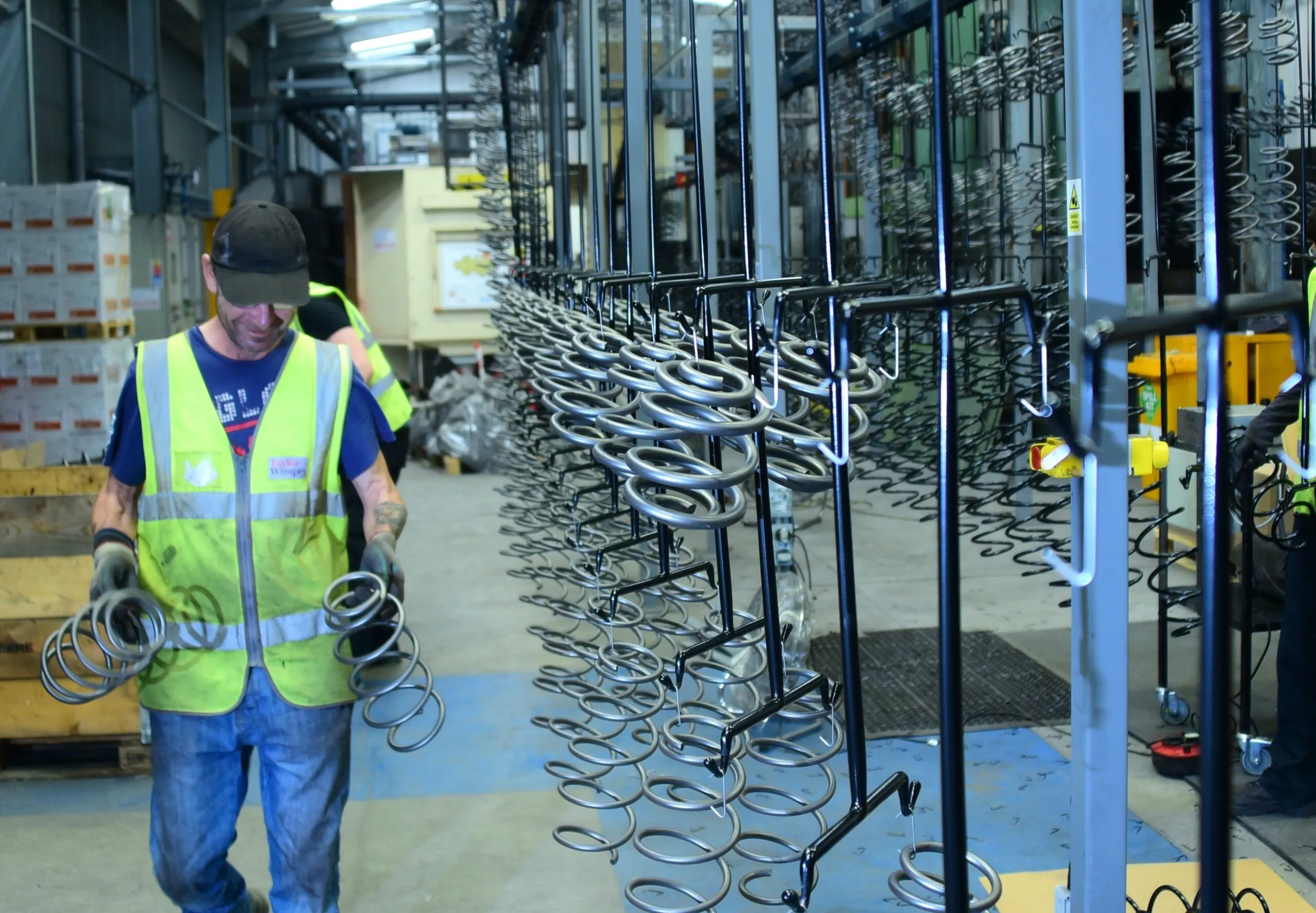
Stainless steel is used to manufacture various components, including compression, tension and torsion springs. This iron-based alloy has benefits for all types of springs.
Stainless steel compression springs
Stainless steel alloys have excellent tensile strength and can withstand heavy loads. This makes it an ideal material for stainless steel compression springs that need to resist significant weight without breaking or deforming. It also has good fatigue resistance, which makes it useful in applications where springs experience repeated compression cycles.
Stainless steel tension springs
Stainless steel is corrosion-resistant and suitable for tension springs in extreme environments where they may be exposed to moisture, salt and chemicals. For example, they may be used in tractors and harvesters to control the movement of gates, hatches and levers whilst protecting them from rain, mud, and pesticides. It also provides corrosion resistance in energy, quarry and mining and fishing industries.
Stainless steel torsion springs
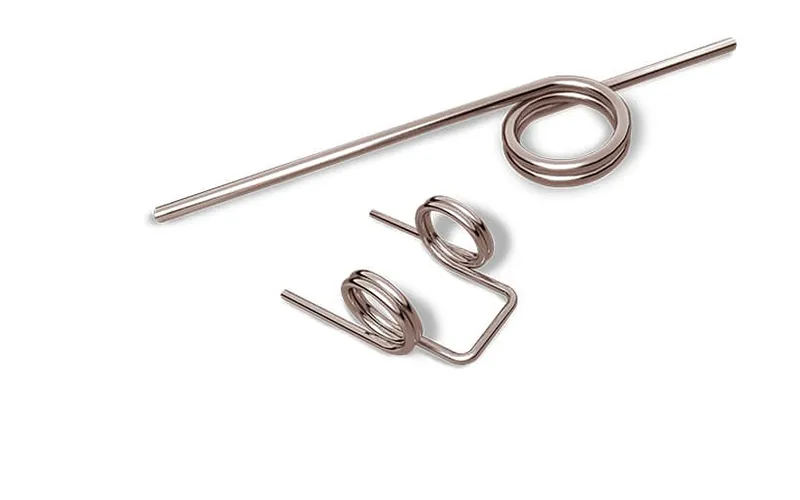
Specific grades of spring stainless steel, such as 304 and 316, can withstand extreme temperatures. This makes it useful in torsion springs that need to function in environments with high heat or cold conditions. For example, these alloys can be used in torsion springs in anti-roll bars for motorsports to withstand heat resistance generated by the engine.
What grade of steel is used for springs?
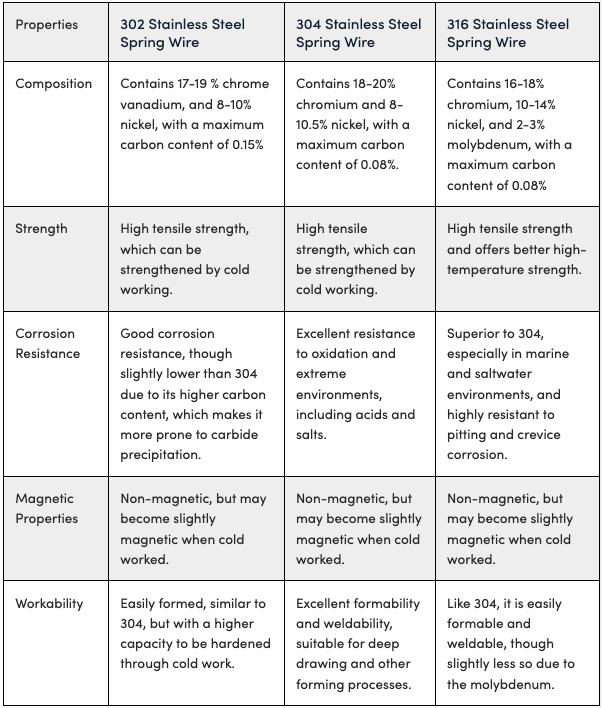
There are over 150 grades of stainless steel available, and these are categorised into five main types. However, grades 302, 304 and 316 are the most commonly used in heavy-duty spring applications. Here is a breakdown of the properties of each type, which are part of the 300 series of austenitic steels.
The five types of stainless steel
The five main types of stainless steel are categorised based on the composition of alloying elements and their microstructure. This influences properties such as strength, corrosion resistance, magnetism and workability. These varying characteristics mean that some types perform better in stainless springs than others.
Austenitic stainless steel
This type is widely used to make stainless steel springs. It is popular because of its high chromium (16-26%) composition, which gives it high levels of corrosion resistance. Austenitic steels also include nickel (up to 35%) and often molybdenum.
Martensitic stainless steel
Martensitic steel is a less common, high-strength group with moderate corrosion resistance, although lower than austenitic and ferritic types. This group is composed of chromium (11.5-18%) and higher carbon content. They can be hardened by heat treatment to improve strength and toughness further, and are ideal for stainless steel spring applications that require high tensile strength and impact resistance.
Precipitation hardening stainless steel
This type uses precipitation hardening to add strength to its key elements, which include chromium (15-17%), nickel and other elements such as copper and niobium. They provide high strength and good corrosion resistance and can be magnetic or non-magnetic, depending on the base structure. This type of stainless steel is ideal for high-performance spring applications.
Ferritic stainless steel
Ferritic steels are known for being affordable and having moderate corrosion resistance. Key elements include chromium (10.5-27%), but unlike austenitic steels, they have little or no nickel in their composition. This group has lower toughness than austenitic types, so it is not commonly used to make stainless steel springs.
Duplex stainless steel
Duplex steels offer impressive strength by combining austenitic and ferritic stainless steels, creating a two-phase microstructure. This category offers superior resistance in marine and saltwater environments and is made from chromium (18-28%), nickel (4.5-8%), molybdenum and nitrogen. However, they are magnetic due to their ferritic content and can be difficult to form, making them a less common choice for stainless steel springs.
What is the best stainless steel grade for springs?
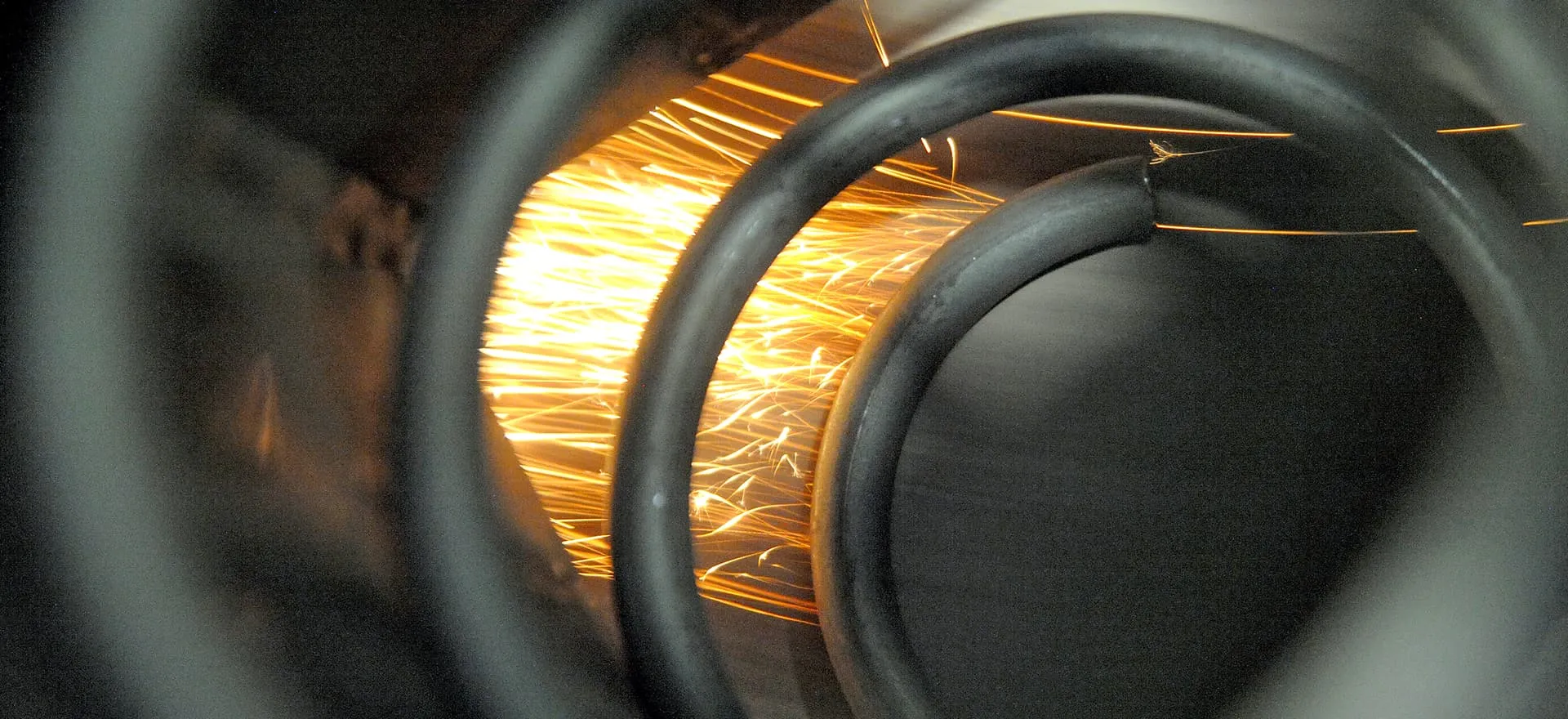
The best stainless steel grade depends on the spring's required performance, specifications and the environment in which it will be used. Standard 302 offers good general resistance to the atmosphere; however, 304 may be more suited to environments with acids and salts. By adding extra elements such as molybdenum, as in type 316, superior protection can be gained for use in marine environments. Other factors influencing the best steel grade include cost, temperature resistance, magnetic properties and workability.
Get stainless steel springs from the specialists
At Lesjöfors, we precision-engineer springs from a diverse range of materials, including stainless steels, copper and titanium alloys, plus super alloys, including Inconel, Hastelloy and Nimonic. We also hold one of the largest global stocks of chrome silicon and chrome vanadium wire anywhere in the world. Our expert team of metallurgists and quality engineers are on hand to advise on the best spring materials for your application, and ordering custom stainless steel springs couldn’t be simper. Get in touch today.