
What is a clock spring & how does it work?
Veröffentlicht: 2026 05 06

Despite the name, clock springs – or spiral torsion springs – have little to do with timekeeping. Their ability to maintain a consistent connection through continuous rotation makes them a critical component in automotive steering systems and a wide range of other precision applications.
At Lesjöfors, our legacy in manufacturing springs and pressings (also known as stampings) stretches back over 170 years, and our products are trusted across some of the most demanding industries in the world – from aerospace to defense.
In this blog, we explore what a clock spring is, how it's designed, typical applications, and key indicators of wear that can affect performance and safety.
What is a clock spring?
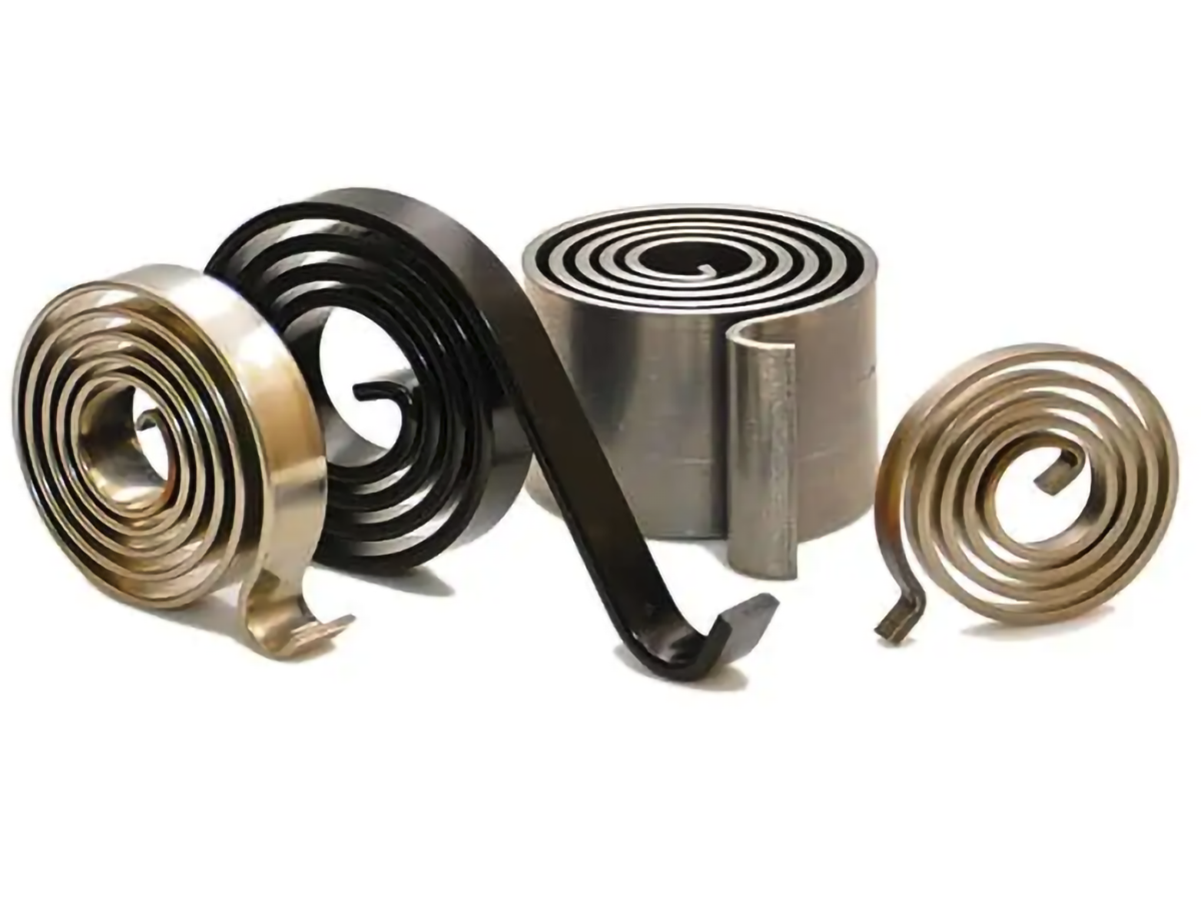
A clock spring is a flat strip spring wound into a spiral shape that stores and releases rotational energy. The name comes from the mainspring mechanism found in traditional clockwork, where a coiled strip of spring steel drives the movement of clock hands.
The same principle is applied across a far wider range of applications – from automotive steering systems to aerospace, medical devices, electronics, and industrial equipment. They may also be referred to as spiral torsion springs.
How does a clock spring work?
A clock spring works by building tension as it winds, then releasing it in a controlled way as it unwinds. At the center of the spiral torsion spring mechanism is an inner arbor – the fixed point around which a flat steel strip is pre-stressed and coiled.
As the outer barrel rotates, the strip winds tighter around the arbor, storing mechanical energy. When released, that energy unwinds through multiple revolutions, delivering steady, controlled torque.
The more the spring is wound, the greater the torque it produces, making clock springs well suited to applications that demand consistent, precise rotational force over repeated cycles.
Key functions in automotive applications
In modern vehicles, the clock spring sits between the steering wheel and the steering column, acting as the critical link between rotating and fixed components. This position makes clock springs responsible for several important functions.
Airbag deployment
The spring keeps a constant electrical flow to the driver-side airbag, regardless of the position of the steering wheel. This ensures the airbag can deploy on impact without any delays.
Horn and controls
A ribbon cable spool inside the clock spring carries electrical signals to the horn, cruise control, audio controls, and phone buttons mounted on the steering wheel. As the wheel turns, the ribbon winds and unwinds to keep those connections live.
Signal transmission
Beyond safety systems, the clock spring ensures uninterrupted signal transmission between the rotating steering wheel and the fixed electronics in the dashboard. Without it, every turn of the wheel would risk cutting the power supply that modern vehicles depend on.
Other applications of clock springs
Aside from steering systems, clock springs’ ability to deliver controlled energy in a compact form makes them valuable across a range of other industries.
- In industrial and energy settings, these types of springs are found in retractable cable and hose reels, where they provide the constant return tension needed.
- In hydraulics, they are used in valve actuators and flow control mechanisms.
- Aerospace and defense applications use spiral torsion springs in control systems and precision instrumentation as they perform reliably under extreme conditions.
- In electronics, they feature in retractable cord mechanisms and spring-loaded assemblies where compact energy storage is a priority.
- Medical devices also make use of clock spring mechanics, particularly in equipment that requires smooth rotational movement without the bulk of motorized components.
- In transportation in flatbed tarp and speciality tarp systems - tarping solutions designed for flatbed trailers, which carry open loads and oversized freight.
Signs of clock spring failure
Like any component subject to repeated stress, clock springs can wear over time. Within steering systems, every turn of the wheel puts the internal ribbon cable through another wind and unwind cycle, and after years of use, that friction and cumulative wear can begin to affect performance.
Knowing the warning signs early can prevent more serious and costly problems down the line. Common signs of clock spring failure within automotive steering include:
- Airbag warning light – an illuminated warning light on the dashboard can indicate a break in the connection caused by a worn spring.
- Non-functional horn or steering wheel controls – if the horn stops working, or phone buttons become unresponsive, a failing clock spring is a likely cause.
- Unusual noises when turning – grinding, etc., when turning the steering wheel can indicate that internal components are worn or damaged.
- Intermittent electrical faults – buttons that work on and off can point to a partially damaged ribbon cable.
Spiral torsion springs from Lesjöfors
Whether referred to as clock springs or spiral torsion springs, the underlying principle is similar: delivering controlled rotational force in compact spaces. That versatility makes them indispensable across the automotive industry and many other sectors.
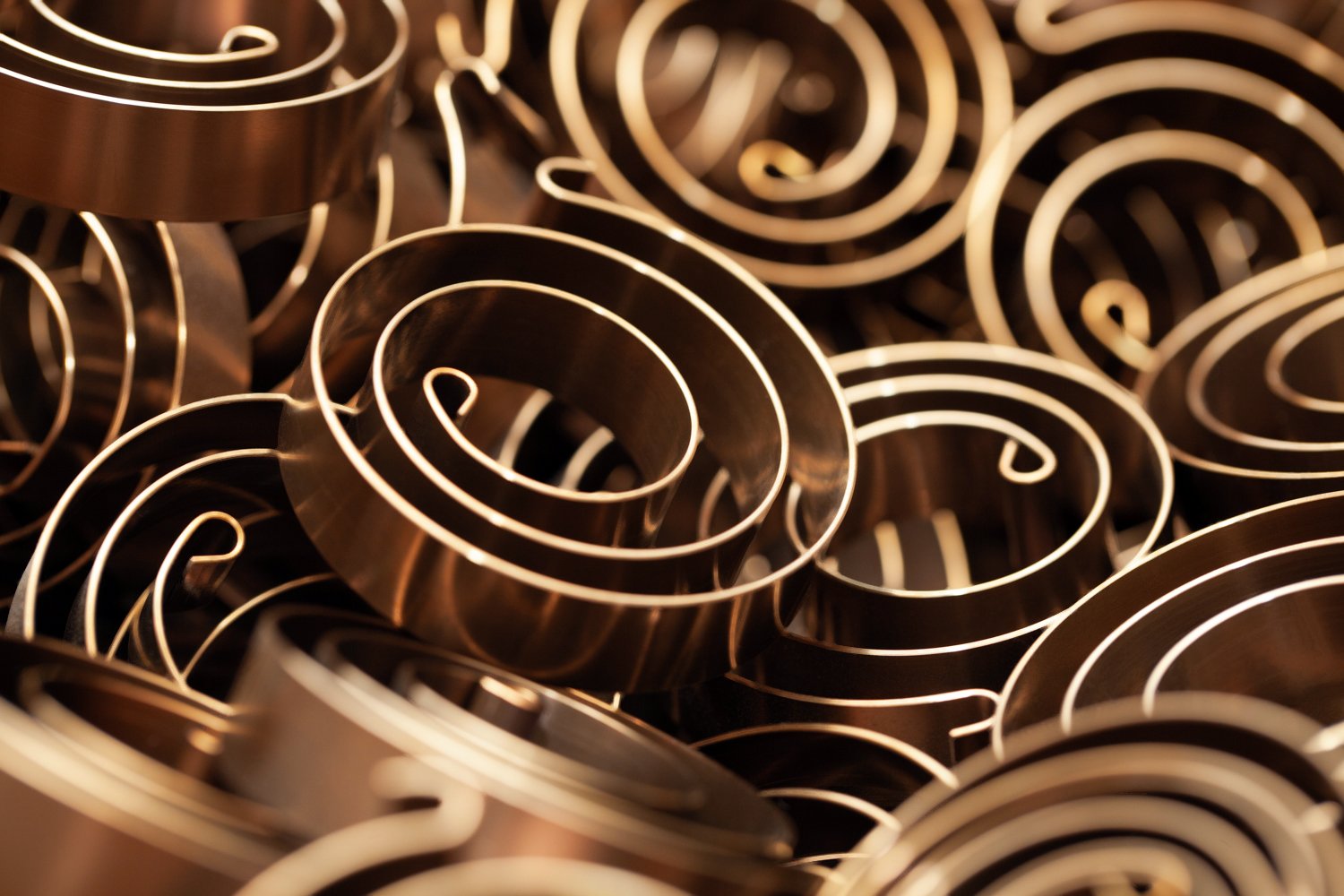
At Lesjöfors, we design and manufacture spiral torsion springs in a range of materials, sizes, and torque capacities. With one of the most comprehensive stock ranges in the industry and the ability to custom design solutions for almost any application, our team has the expertise to specify the right spring for your requirements.
Find out more about our spiral torsion springs or get in touch to discuss your project.