
What are constant force springs? How they work and typical uses
Veröffentlicht: 2026 02 27
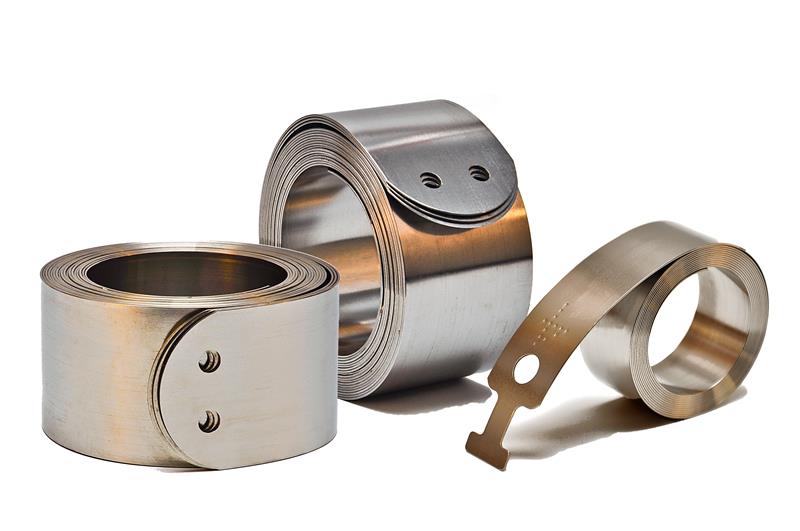
Constant force springs are a specialized flat spring designed to deliver a near-constant load throughout their working range. This stable force profile makes them well-suited for applications that require controlled motion, smooth retraction, or reliable counterbalance, including medical devices, aerospace systems, and industrial equipment. With hundreds of years of spring manufacturing experience, Lesjöfors is a trusted global supplier of both standard and custom constant force springs. In this guide, we explain what a constant force spring is, how it works, its key benefits, common applications, and how to determine whether it is the right solution for your design.
What is a constant force spring?
A constant force spring – also known as a constant load spring – is manufactured from a pre-stressed flat strip of spring material that is tightly wound into a coil. As the spring extends, it delivers an almost uniform force over its working length. This differs from compression or traditional extension springs, which follow Hooke’s Law, where force increases proportionally with deflection. A constant force spring is engineered so the output force remains stable as the strip uncoils.
The tightly wound coil allows long travel to be stored in a compact space, while the pre-stressed design supports consistent pull force throughout most of the working stroke. Because the strip is formed to a controlled curvature, the spring can extend with minimal variation in load, making constant force springs well-suited to applications that require controlled, repeatable movement.
How do constant force springs work?
A constant force spring starts as a pre-stressed flat strip wound into tight coils. When the free end is pulled, the strip uncoils and straightens. The curvature at the remaining coil changes very little during extension. As a result, the pull force stays nearly constant through most of the stroke.
In simple terms, energy is stored when the strip is coiled. As it uncoils, the strip transitions from curved to straight. Because the bending radius at the coil remains almost unchanged, the output force remains stable.
The force produced by a constant force spring depends on material thickness, strip width, coil diameter, material properties, and stress level. Precise control of these parameters is essential. Small changes in thickness or diameter significantly affect load capacity and cycle life.
Key benefits of constant force springs
Constant force springs are valued for their stable performance and compact design. Their key advantage is steady force delivery across long extensions, supporting controlled movement. A long working stroke can be stored in a tightly wound coil, making efficient use of available space.
They are particularly effective in long-travel applications and provide smooth, repeatable motion. With proper material and geometry selection, they can achieve reliable performance over thousands of cycles. These characteristics make them a practical solution for retractable and counterbalance systems.
Types of mounting methods
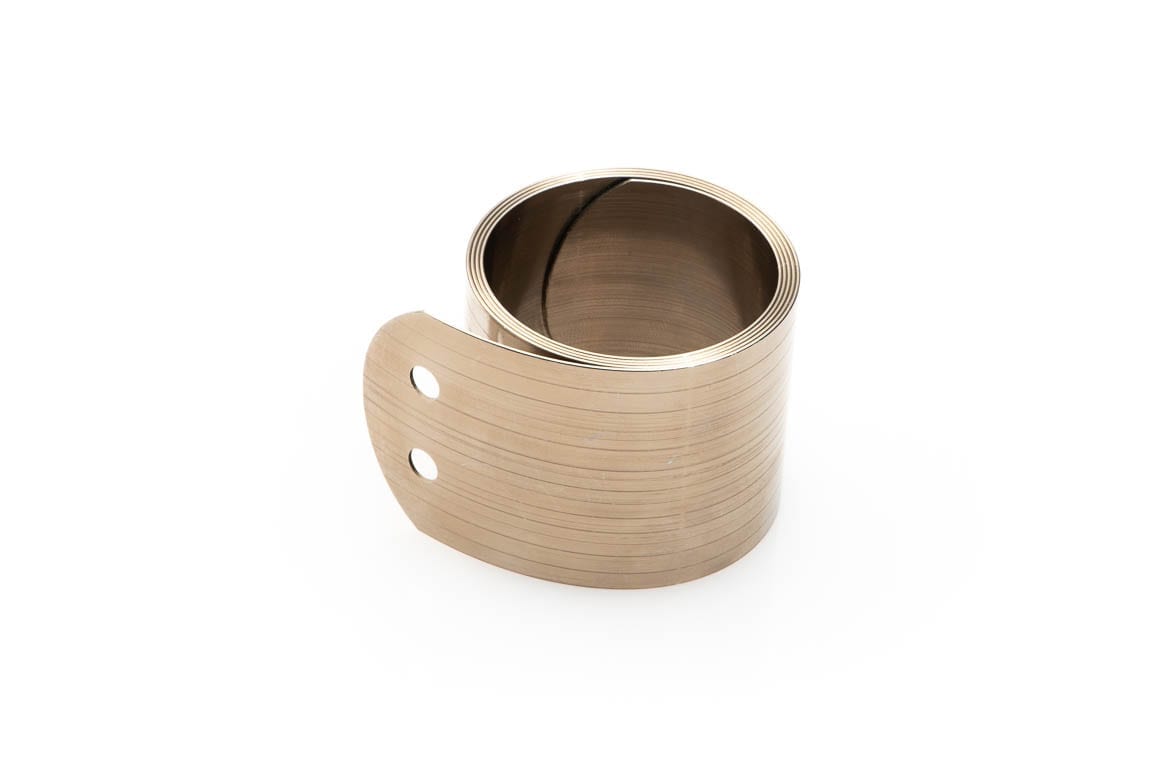
Mounting configuration affects the performance of constant force springs. Here are the most common mounting methods and their points of difference:
Back-to-back
Two opposing springs unwind in opposite directions. This improves stability, reduces torsional effects, and supports longer extension with balanced force.
Tandem
Two springs mounted in sequence increase total force and operating range when back-to-back arrangements are not possible.
Cavity
A cavity-mounted spring uses a stationary spool. This simplifies assembly but may introduce higher friction due to surface contact.
Laminar
Multiple interwound springs are layered together to increase force within a limited space. This design suits short extensions requiring a higher load.
Shaft fitting
The spring mounts directly onto a rotating shaft or drum, enabling compact integration and smooth extension.
Bearing or conduit
In conduit-style systems, the spring is guided through a defined path, supporting controlled motion in restricted spaces.
Common applications of constant force springs
Constant force springs are used in industries that require steady pull and controlled movement.
Surgical devices
Within the medical industry, these springs are used in precision tools and surgical robots that require consistent force and smooth motion.
Medical and healthcare equipment
Hospital beds, diagnostic devices, and support systems used in the medical industry benefit from compact, controlled spring mechanisms.
Window counterbalance systems
In windows, constant force springs balance the sash weight across the full travel, allowing for smooth, stable operation.
Aircraft doors and landing gear
Aerospace systems use constant load springs for controlled deployment and weight counterbalance in doors and landing gear.
Electric motor fire dampers
Reliable actuation force is essential in safety-critical HVAC systems across the energy, defense, and aerospace industries.
Cable management and retraction systems
Retractable assemblies in medical and electronics applications rely on steady tension for smooth extension and return.
Industrial machinery and automation
Automated systems in machinery use constant force springs for tensioning, feeding, and counterbalance functions.
Consumer products and electronics
Compact retractable systems in electronics often depend on stable force delivery in limited space.

How to select the right constant force spring
Selecting the correct constant force spring requires balancing performance requirements with space and durability considerations.
Key factors to consider are:
- Required force: Determine the pull force needed to counterbalance the weight or drive motion. Force increases with material thickness and width.
- Stroke length: Define the total extension required. Constant force springs are well-suited for long travel applications.
- Available space: Coiled diameter and mounting orientation must fit within the installation envelope.
- Cycle life: Higher cycle life may require larger coiled diameters or lower stress levels. Thickness, diameter, and stress must be balanced carefully.
- Environmental conditions: Corrosive or hygienic environments may require stainless steel strips or protective surface treatments.
At Lesjöfors, constant force springs are manufactured from stainless steel strip and spring steel strip with controlled forming processes. Careful material selection and geometry optimization support stable force output and long term durability.
Constant force spring solutions from Lesjöfors
As an experienced constant force spring manufacturer, Lesjöfors supports both prototype development and high-volume production. Our engineering teams work closely with customers to optimize performance, durability, and manufacturability at every stage of the project. We supply both stock and custom constant force spring solutions and assemblies. Our range includes multiple lengths, force ratings, and mounting configurations to suit a wide variety of applications.
If you’re evaluating which type of constant force spring is right for your application or need guidance on how constant force springs can work within your system, contact our expert team. We’ll help you develop a practical, technically robust solution engineered for long-term performance.