
Aircraft components: key parts and their critical functions
Veröffentlicht: 2026 04 02

Every time an aircraft leaves the ground, thousands of precision components work in concert to keep it there. From the structural skeleton that holds the frame together to the mechanical systems that control every degree of movement, aircraft components operate under extreme stress and with zero margin for error. Aviation demands precision at a level few industries can match – and that demand extends to every spring, wire form, and damping element within the aircraft.
Lesjöfors supplies precision springs and engineered components to some of the world's most demanding industries, including aerospace, aviation, and defense. In this guide, we break down the major aircraft components and equipment, explain how they function together, and highlight where Lesjöfors precision components support aviation performance.
1. Fuselage
The fuselage is the central structure of an aircraft. It houses the cockpit, passengers, cargo, and many of the aircraft’s core systems. Beyond providing space, it plays a major role in aerodynamics, reducing induced drag while maintaining structural integrity under pressure and stress.
It also acts as the connection point for other major aircraft components, including wings, empennage, and landing gear. Because of this, the fuselage must balance strength with weight efficiency – a critical factor in aviation performance.
Compression springs in aircraft fuselage
Lesjöfors manufactures compression springs for use in aircraft door mechanisms, where consistent force and long service life are critical to both safety and ease of operation. We also supply wire forms for seat assemblies and panel mounting systems, offering the structural flexibility and repeatability that aviation interiors demand.

2. Wings
Wings are responsible for generating lift – i.e. the force that allows an aircraft to rise and remain in the air. Their airfoil shape creates a pressure difference between the upper and lower surfaces, enabling controlled flight.
Modern wings also include key control surfaces such as flaps and slats, which adjust lift during takeoff and landing. Wings also often house fuel tanks and structural reinforcements, making them one of the most complex systems within aircraft components and equipment.
Coil springs in aircraft wings
Our torsion springs feature in aileron systems and wing flaps, providing the rotational force and reset motion that control surface operation depends on. Our coil springs integrate into actuator assemblies, supporting precise, repeatable movement in systems where tolerances are tight and failure is not an option.
3. Empennage
The empennage, or tail section, provides stability and directional control. It includes the vertical stabilizer (fin) and horizontal stabilizer, along with control surfaces such as the rudder and elevators.
This section ensures the aircraft maintains balance in flight and responds accurately to pilot inputs. Without it, controlled flight would not be possible.
Helical springs & wire components in aircraft empennage
Helical springs are used in elevator mechanisms, providing the controlled resistance and return force that pitch control requires. Precision wire components are produced for control linkages throughout the tail section, where dimensional accuracy and fatigue resistance are essential.
4. Landing gear
The landing gear system supports the aircraft during takeoff, landing, and ground operations. It must absorb significant impact forces while maintaining stability and alignment.
Key elements include wheels, struts, brakes, and retraction mechanisms. The system is designed to be both robust and lightweight, ensuring durability without compromising performance.
Gas & compression springs in aircraft landing gear
Gas springs are used in landing gear retraction systems, providing controlled force for deployment and stowage. Compression springs are integrated into strut assemblies, contributing to the energy absorption and load distribution that protect both the aircraft structure and the landing surface on contact.
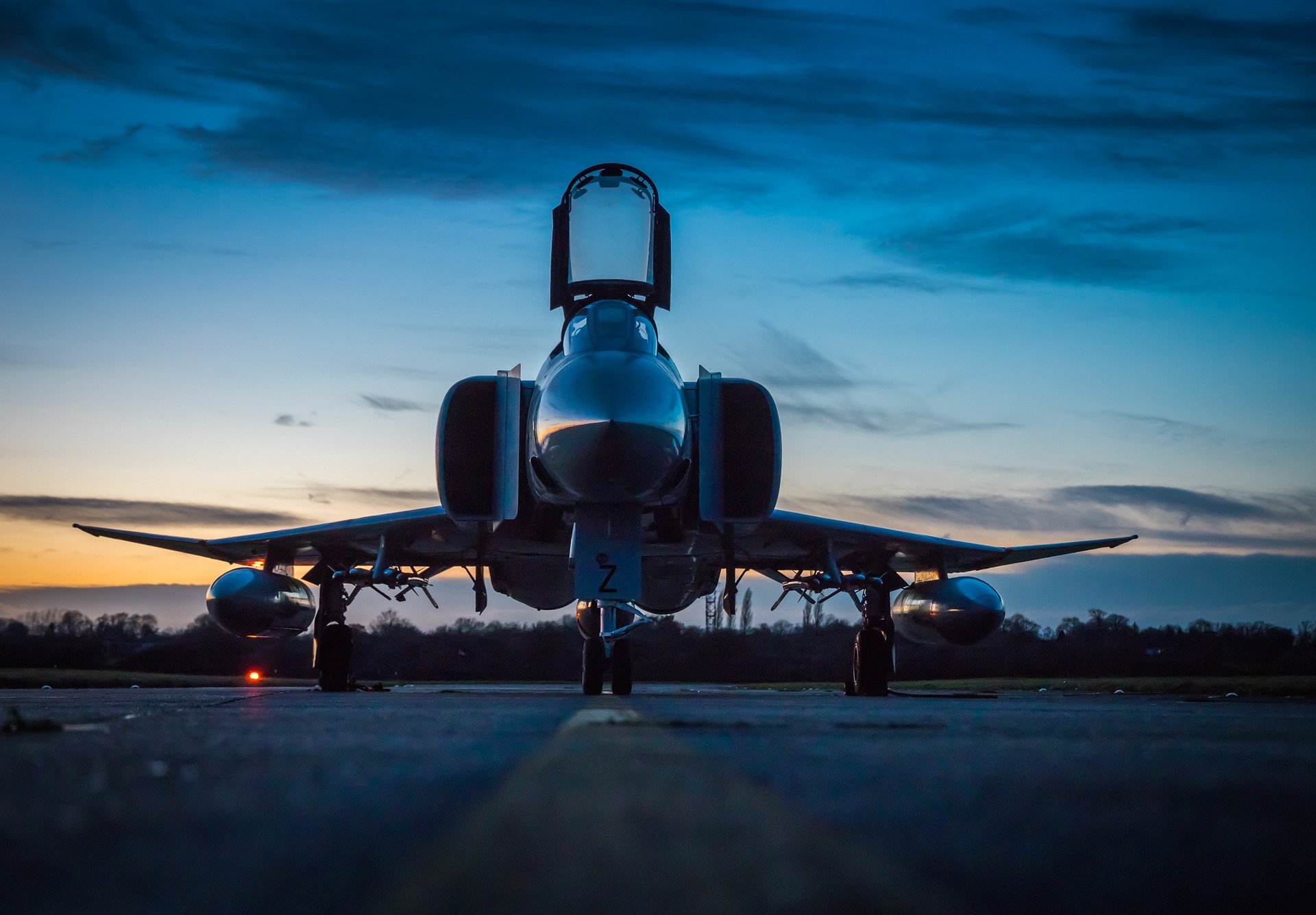
5. Powerplant
The powerplant includes the aircraft’s engines and associated systems, such as nacelles and mounting structures. Its primary role is to generate thrust, enabling the aircraft to move forward and maintain flight. Beyond propulsion, the powerplant must also manage continuous vibration, thermal stress, and dynamic loading, all of which can impact surrounding aircraft components and overall system reliability.
Precision components in aircraft powerplants
Within powerplant systems, precision aircraft components help control movement and reduce stress. Lesjöfors produces compression springs designed to manage vibration in engine assemblies, helping keep parts stable during operation.
Custom wire forms are also used in mounting and support systems to hold components in place. These parts are built to perform reliably under high temperatures and changing loads, supporting consistent operation over time.
Precision springs for aircraft components
Across all major aircraft components, springs and wire forms perform essential functions – often without being visible. They enable motion, absorb energy, maintain tension, and ensure systems return to their correct positions.
Lesjöfors designs and manufactures custom aircraft springs and precision components for the aerospace industry, working to strict industry standards and exact customer specifications. From initial design consultation through to volume production, every stage is built around accuracy, traceability, and consistency.
Whether the application calls for compression springs for high-cycle door mechanisms or torsion springs for flight control systems, Lesjöfors brings the engineering expertise and manufacturing capability to support reliable performance in demanding environments.
Explore our aerospace spring solutions or contact us to discuss your aircraft component requirements.