
What is a garter spring and how does it work?
Published: 2026 11 19

A garter spring is a helical spring joined end to end to form a ring. Though it may seem small and unassuming, a garter spring is often the component holding everything together in applications such as oil seals, electrical connectors, and belt drives.
Its job is to apply uniform radial force around a cylindrical part and to do so consistently over thousands of hours of heat, vibration, and rotation. That takes more engineering than its simple shape suggests.
At Lesjöfors, we’ve been engineering springs for over 170 years. In this post, we explain what a garter spring is, how it works, and how to choose the right one for your application.
What is a garter spring?
A garter spring is manufactured like a standard extension spring, but the ends are formed in various ways to enable them to be joined into a continuous ring.
Part of the wider family of coil springs and wire forms, it shares the same design fundamentals, such as wire diameter, coil pitch, material, and spring rate. However, it works around a cylindrical component instead of along a straight line. A garter spring can provide inward or outward radial force.
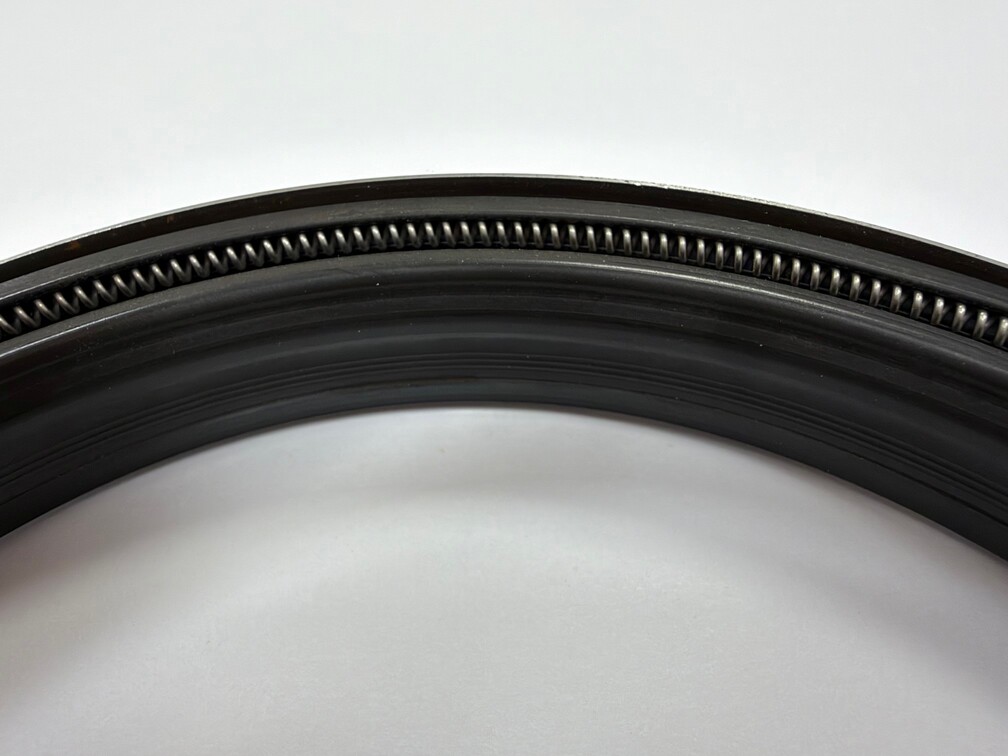
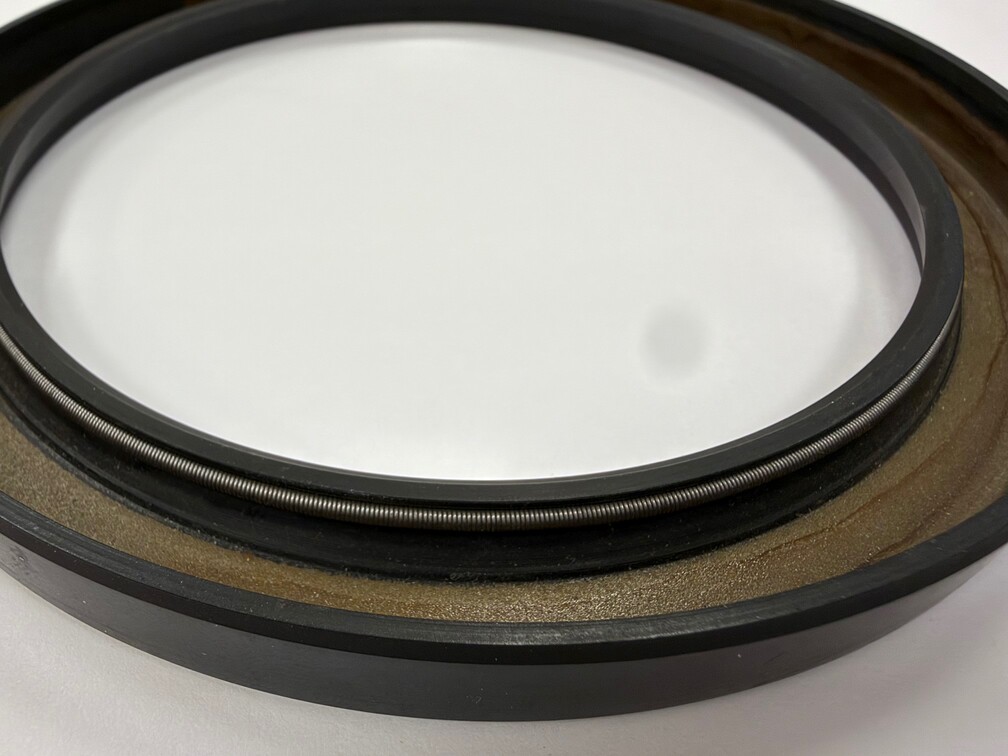
You’ll most often find a garter spring seated in the groove of a rotary shaft seal, but it can also hold parts in place in electrical connectors, belt drives, and other assemblies.
Garter spring meaning and definition
The name comes from the garter, a band worn around the leg to hold up a stocking. A garter spring works in a similar way, wrapping around a part and holding it with even tension.
In engineering terms, a garter spring is a closed-loop helical spring that applies radial force around a shaft, bore, or other cylindrical component.
How does a garter spring work?
A garter spring applies uniform radial force around the full circumference of a circular part. Unlike a rigid clamp or retaining ring, it self-adjusts as conditions change. This helps contact pressure to remain consistent even when a shaft is misaligned, out of round, or moving.
Radial force explained
An internal, closed-coil garter spring is stretched slightly when fitted to provide a preload on the seal lip, converting its tension into even, inward pressure at every contact point. An external, open-coil garter spring does the opposite, pushing outward from within a bore.
The garter spring in a shaft seal keeps the sealing lip in contact through vibration and runout, or as the sealing lip wears.
Initial tension and why it matters
Internal garter springs are coiled with tightly closed coils. Initial tension is the force locked in during coiling, or the load needed before the coils start to separate. Too low, and the seal lip can lift as the elastomer wears; too high, and you get more heat, friction, and seal lip wear.
Stress relieving after coiling stabilizes spring dimensions and improves fatigue life, but it slightly reduces initial tension. Getting that balance right comes down to precise coiling and experience.
Types of garter springs
Garter springs fall into two main types, defined by the direction of the force they apply.
Internal garter springs
Internal garter springs are the most common type. They sit in the spring cavity of a seal and provide inward-facing force, which makes them the standard choice for rotary shaft seals and rod seals. They are closed-coil springs, so their contact force can be tuned through initial tension, spring body outside diameter, wire size, and preload.
External garter springs
External garter springs sit inside a bore or housing and push outward. They are used where a part needs to be pressed against a seal jacket or surrounding wall, such as in seals that work against a bore rather than a shaft. Because they are loaded in compression, they rely on the groove or housing to keep them stable.
Open-coil vs. closed-coil designs
In a closed-coil design, the coils touch along the spring’s length. This gives a compact spring with built-in initial tension and a preload when fitted, which is ideal for most internal garter springs.
In an open-coil design, there are gaps between the coils. When the spring is fitted inside a seal jacket bore or housing, these gaps close up as the spring compresses. It then pushes outward as it tries to return to its original size.
How garter spring ends are joined
The joint is the one point where a garter spring’s even force can be interrupted, so choosing the right method matters. The four main options are:
Hook and eye
One end is formed into a hook, which links into a loop at the other end. This makes the spring quick to fit and remove, so it suits assemblies that need regular maintenance or adjustment and applications where a shaft cannot be pulled out. Garter springs with this joint are often used in conjunction with a split seal.
Nib joint (cone end)
One end is tapered and screwed into the coils of the other, creating an almost seamless joint. It’s the standard choice for many oil seals.
Insert fittings
With an insert fitting, both ends screw onto a short connecting spring. This creates a strong, low-profile joint that sits in line with the coils.
Laser-welded joints
Laser welding fuses the ends permanently. It also creates only two dead coils, which are the coils at the joint that no longer flex. Fewer dead coils mean more consistent pressure, making laser welding ideal for precision seals.
What are garter springs made of?
Garter springs are made from a range of materials, including carbon steel, stainless steel, exotic alloys, silver, and phosphor bronze. Material choice affects contact force, service life, corrosion resistance, and cost, so it should match the operating environment.
Carbon steel
High-carbon spring steel is the cost-effective choice for standard applications. It offers high strength and good fatigue life. It is widely used in oil seals, where the surrounding lubricant helps protect it from corrosion. This material is not suitable for laser-welded joints.
Stainless steel and exotic alloys
Stainless steel and exotic alloys offer superior corrosion resistance in humid or chemically aggressive environments, including food processing, marine, and medical applications. Lesjöfors manufactures garter springs in a wide range of exotic alloys, so the material can be matched closely to the conditions the spring will face.
Phosphor bronze and beryllium copper
Where a garter spring needs to carry current, copper alloys such as phosphor bronze or beryllium copper combine good conductivity with spring performance.
Common uses for garter springs
Garter springs are used wherever a part needs steady radial force around a circular surface. These are the most common applications:
Oil seals and rotary shaft seals
This is the garter spring’s best-known role. Seated behind the lip of a rotary shaft seal, it keeps oil in and dirt out in components and equipment such as automotive engines and gearboxes, hydraulic pumps and cylinders, and marine propulsion shafts.
Electrical connectors and grounding
In cylindrical connectors, a garter spring creates many contact points around the full circumference instead of just one or two. This helps keep resistance low and contact reliable under vibration, which is ideal for electronics, grounding systems, and power connections.
Belt drives, conveyors, and component retention
Close-wound garter springs can act as flexible round belts in light-duty drives and conveyors, stretching to absorb shock and misalignment. They also hold segmented parts together, such as the carbon seal rings used in aerospace and turbine applications, and can retain components on a shaft without fasteners.
Medical devices and energy systems
In medical equipment, small stainless steel garter springs provide consistent force in seals and connectors where reliability and cleanliness are critical. In the energy sector, from wind turbines to power distribution, they energize seals and help maintain contact under heat, pressure, and constant vibration.
How to specify a garter spring
Garter spring sizes and forces are calculated from the application. Work through this checklist to define what you need:
- Wire diameter: Lesjöfors produces garter springs with wire diameters from 0.03 to 5.00 mm.
- Coil diameter: This must fit the spring cavity or housing. Coil diameters range from 1.00 to 60.00 mm.
- Joint type: Consider the requirements for each joint type. The most common is the cone end.
- Material and environment: Will it face oil, moisture, chemicals, extreme temperatures, or need to carry current?
A garter spring calculation brings all of these factors together: wire diameter, coil diameter, material, free length or assembled mean diameter, and whether the spring is used internally or externally.
Custom garter springs from Lesjöfors
Getting a garter spring right means balancing force, size, material, and joint type against the conditions it will face. Our engineers work with you throughout every stage of the design and manufacturing process. They help define the specification, recommend the right joint and material, and support prototyping before scaling up.
Using advanced CNC coiling, we produce garter springs with repeatable precision. Production is certified to ISO 9001, ISO 14001, and ISO 45001, and medical work is covered by ISO 13485. This is the case whether your application faces high temperatures, high cycle counts, corrosive media, or seawater.
Explore our garter spring capabilities or request a custom quote.