
Spring technology & manufacturing
Our spring manufacturing process is designed to maximize efficiency and strengthen our competitive edge within the industry. We combine state-of-the-art machinery, advanced software, and deep engineering expertise to deliver high-performance production systems. With one of the industry's most extensive ranges of large-scale, high-end hot and cold spring coiling and high-speed pressing technologies, we produce precision springs and pressings of the highest quality.
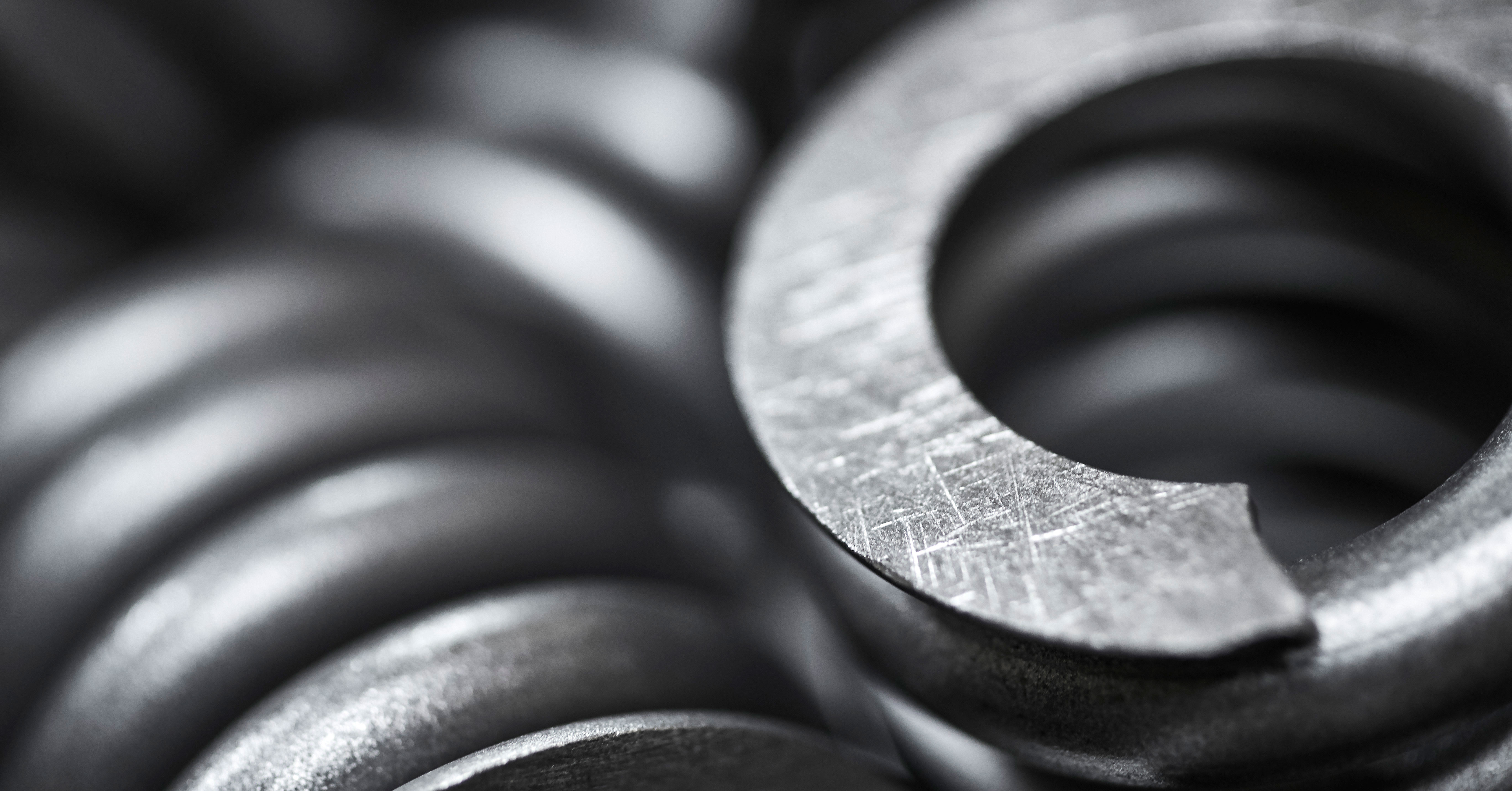
Spring manufacturing technologies
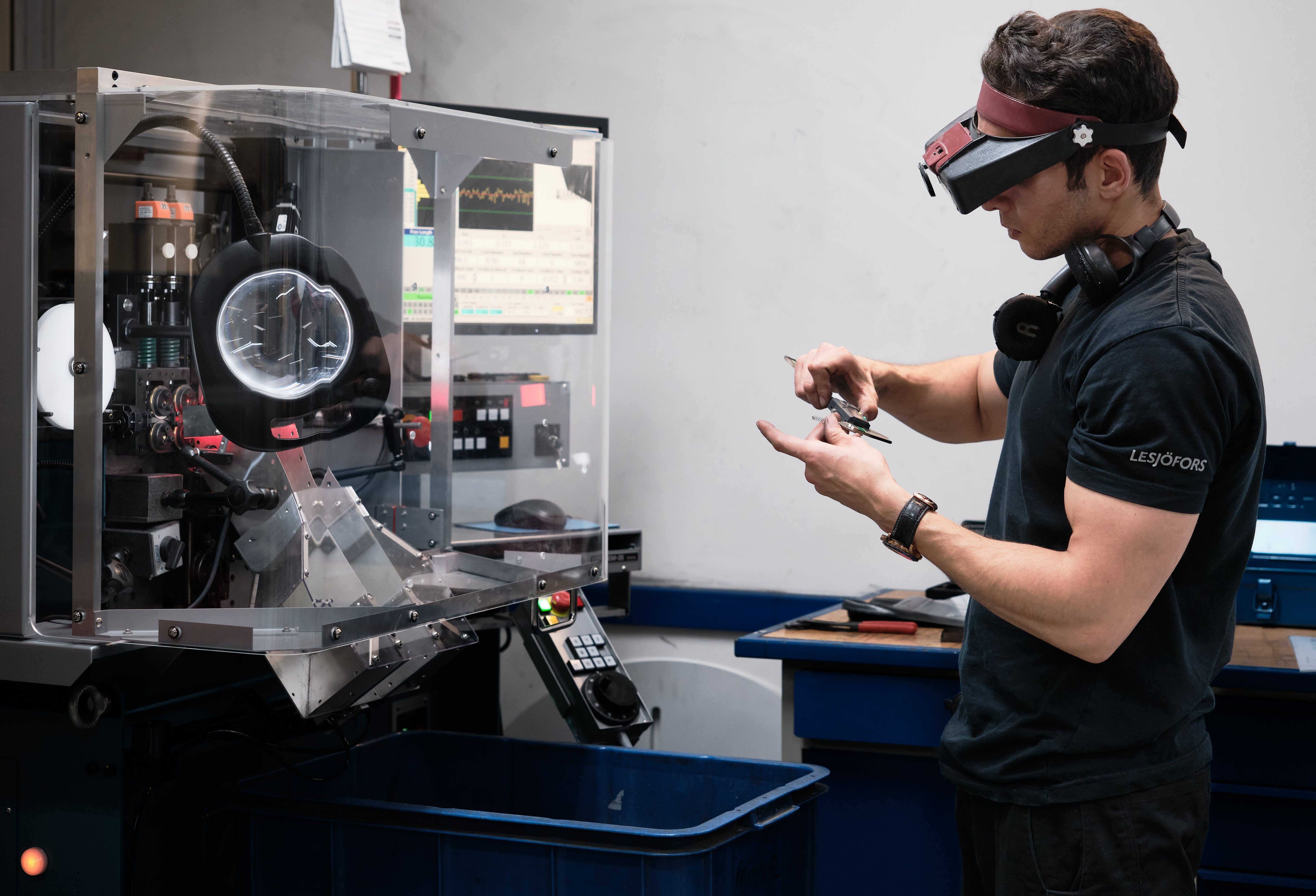
CNC coiling
Our CNC coiling machines feature an advanced range of industry-recognized, high-precision spring brands, each known for technical excellence and quality assurance. These machines deliver exceptional accuracy, production efficiency, and consistent results across a wide wire range. For applications requiring springs manufactured to the tightest tolerances, our CNC technology ensures unmatched reliability and minimizes the risk of defects.
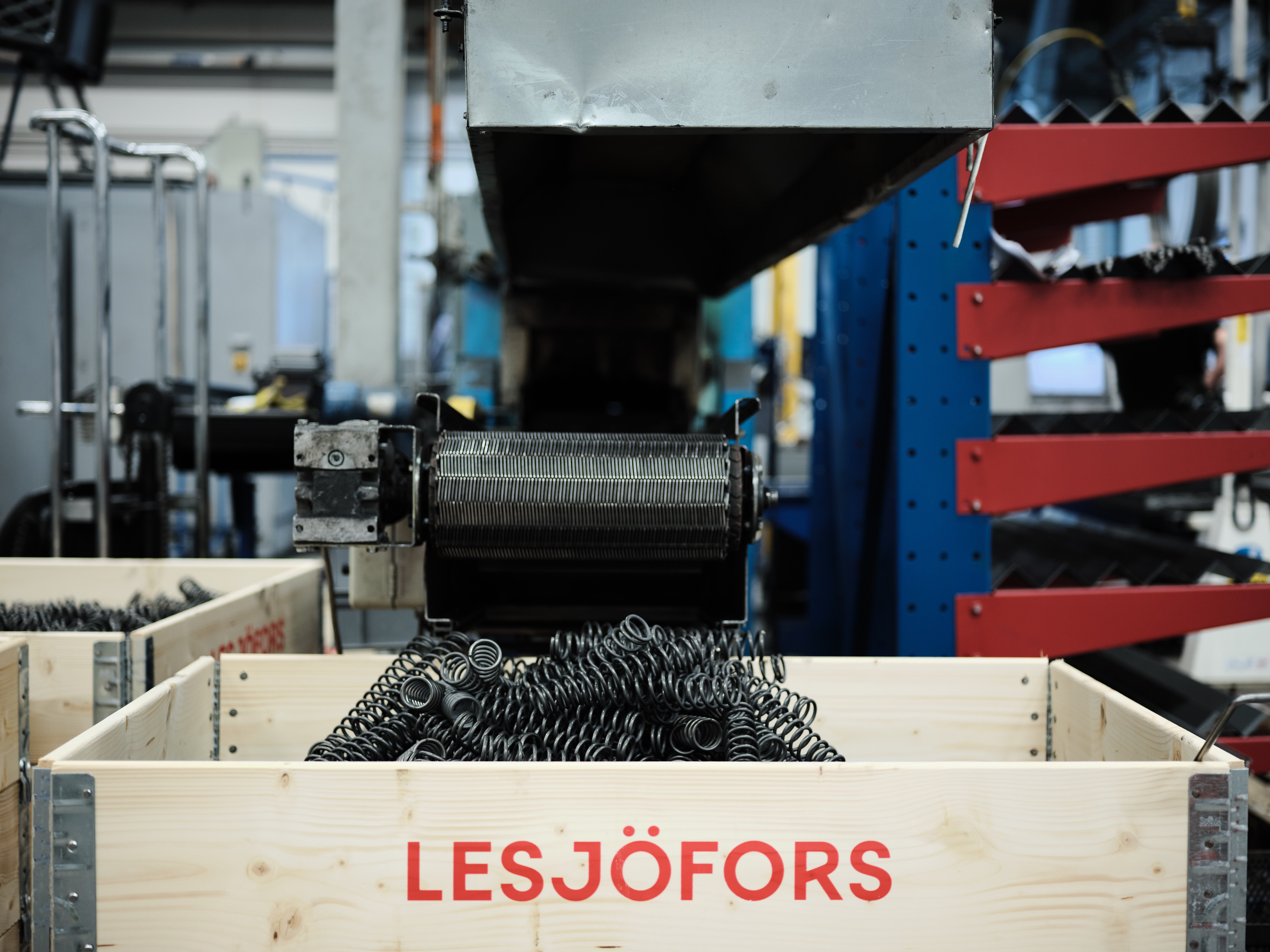
Heat treatment
Multiple in-line conveyor belt ovens deliver a stress-relieving process which enables the spring to retain its shape and functionality when put under stress – whether it be compression, torsion or tension. Our heat treatment capabilities are fully automated and computer-controlled to maximise the demands of the material and spring formation.
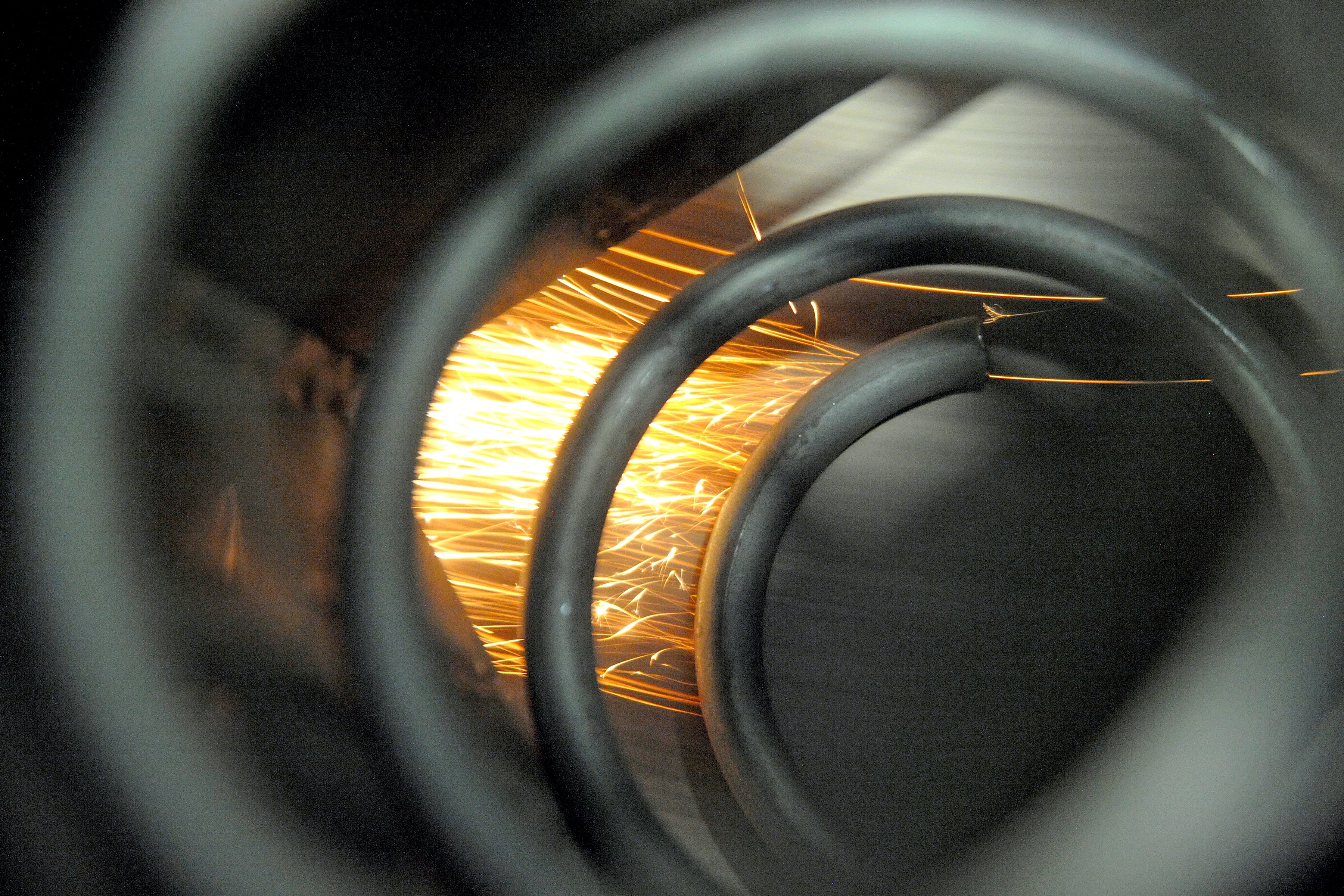
Grinding
Compression springs commonly require the end of the coil to be shaped flat or square to suit the application of that spring. With millions of coil springs manufactured for various applications and industries, we offer an extensive range of horizontal, vertical, wet, and dry grinders to ensure absolute accuracy during the application implementation stage.
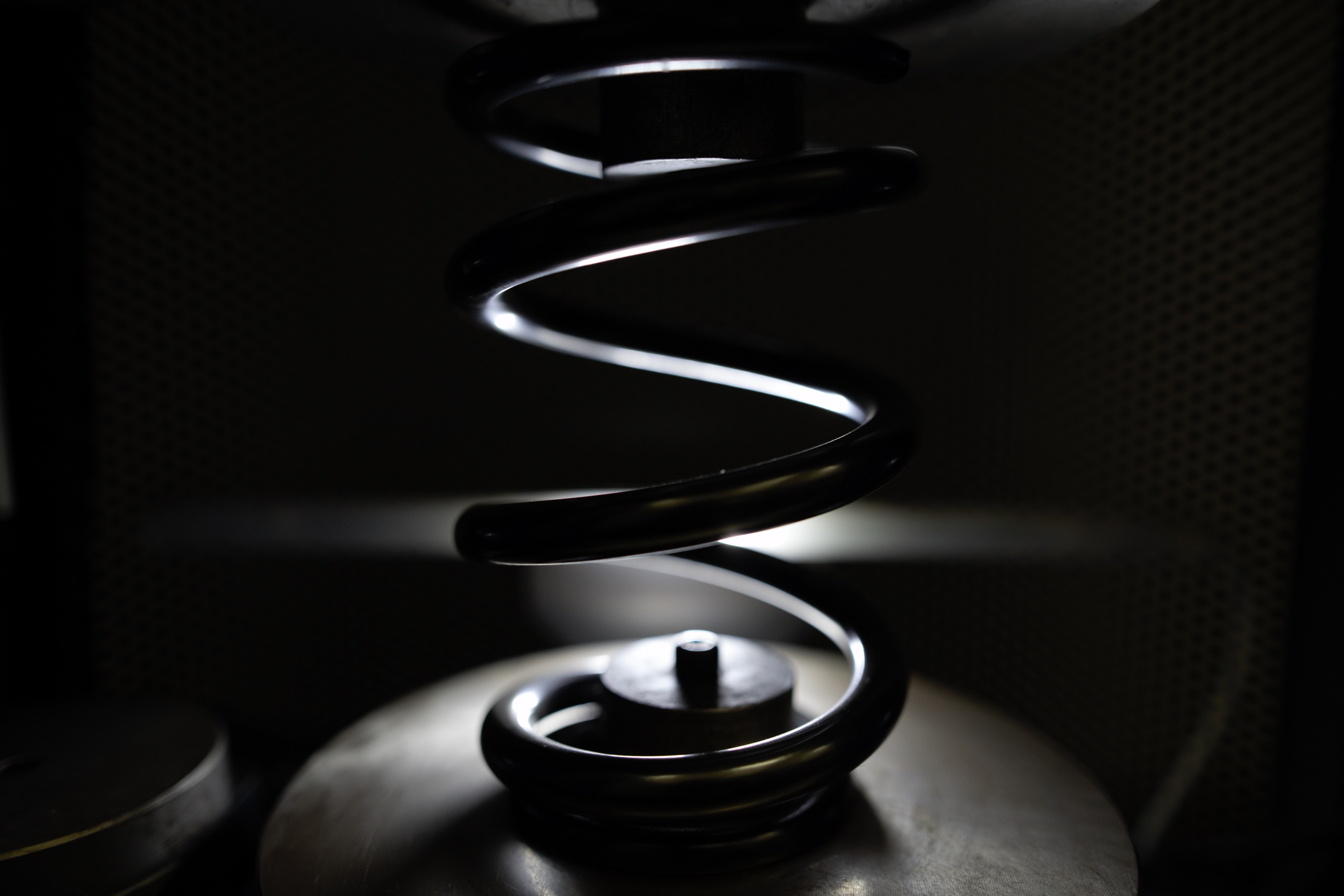
3D scanner
Our 3D optical measuring and testing scanners utilise high-quality cameras and laser technologies, enabling contactless, fast and digital quality controls. These allow us to keep a digital library for production processing and customer sampling.
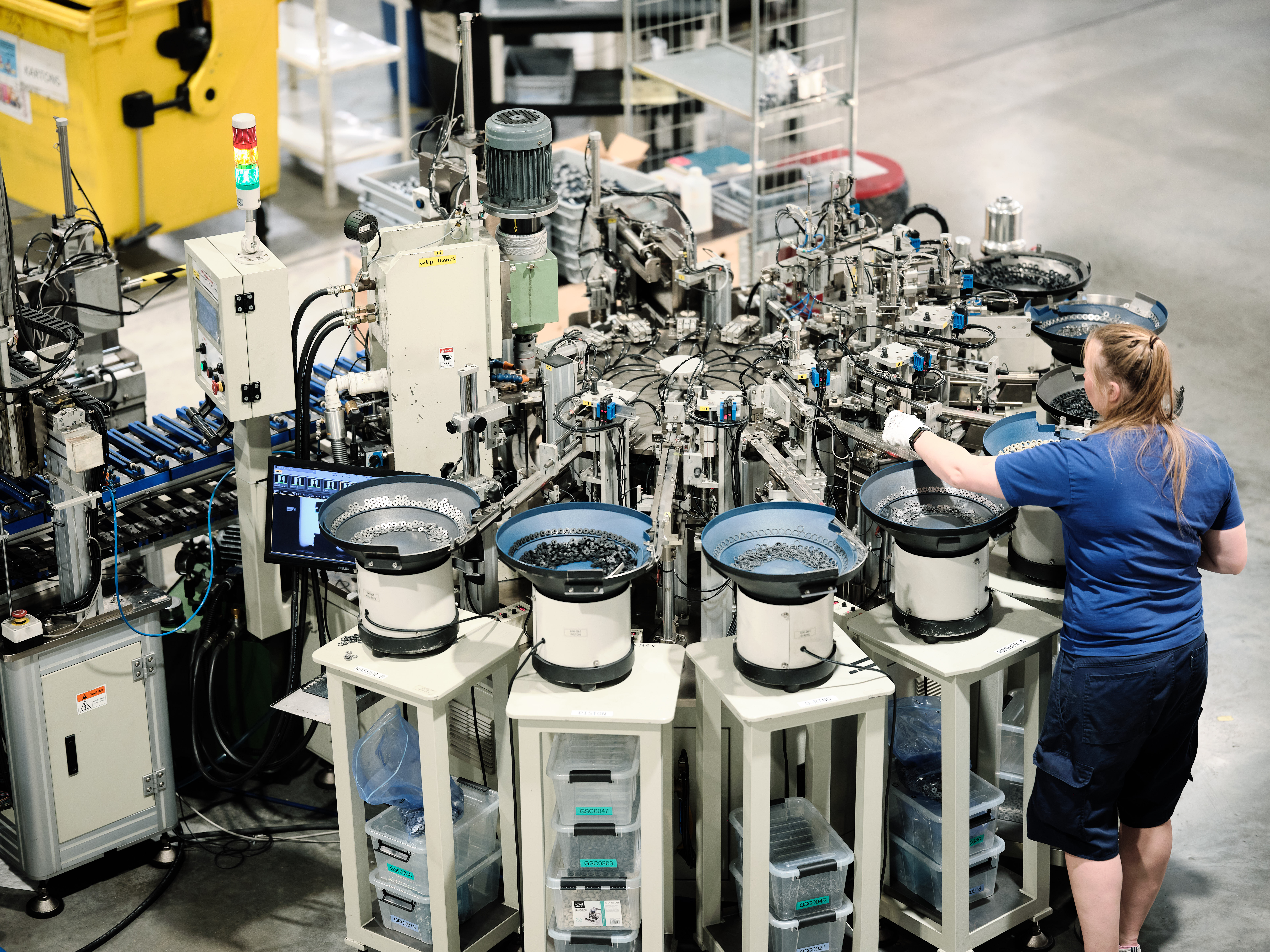
Robotics & automation
When your production depends on precision, delays and errors aren’t an option. That’s why we’ve invested in advanced automation and robotics – to help you get consistent, high-quality springs faster and more cost-effectively. Our facilities feature smart, automated systems that simplify processes, reduce risk, and keep your production moving with maximum efficiency.
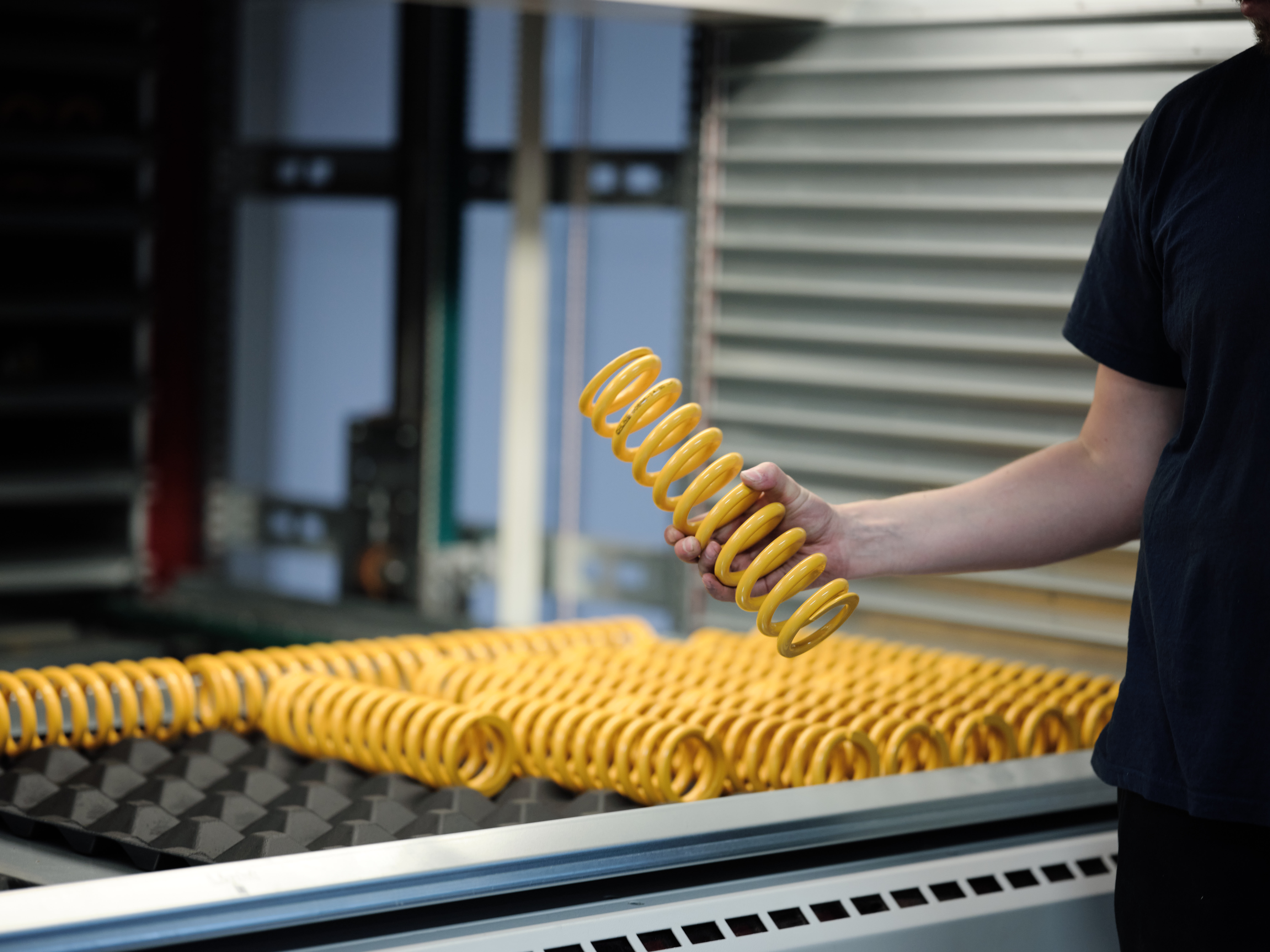
Powder coating
You need coatings that protect, and colours that represent your brand perfectly. Our fully automated, computer-controlled powder coat lines deliver both. With optional zinc phosphate pre-treatment, our process provides up to 1,000 hours of salt spray resistance for lasting durability. Have a brand colour in mind? We can match your RAL or Pantone and offer an ever-growing palette to bring your vision to life without compromising on performance. We can also print individual part numbers on all your products.
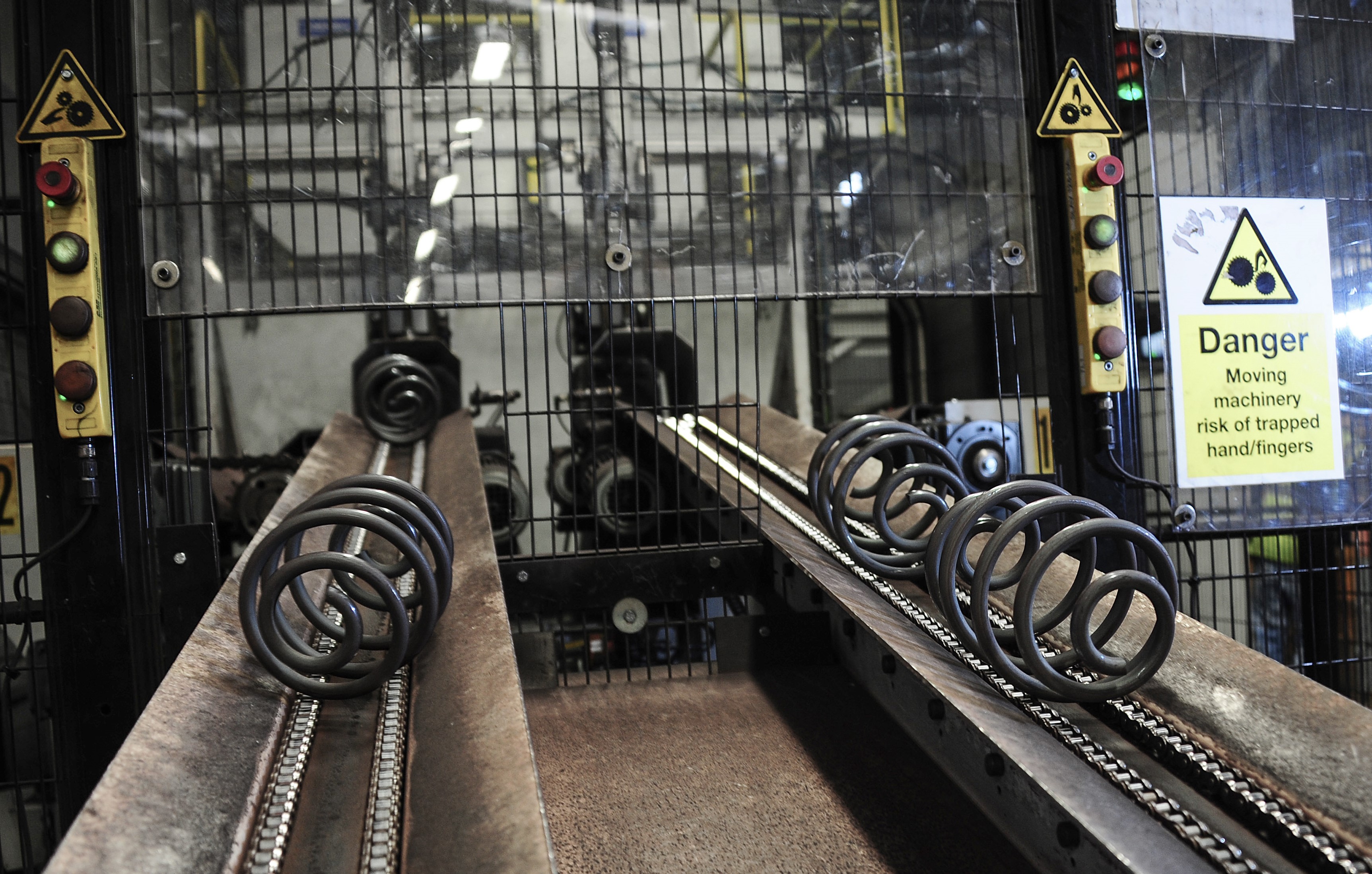
Shot peening
Our multiple in-line shot peening facilities are built to extend the life of your components. This proven process adds a protective compressive force to the spring surface, helping prevent cracks, resist corrosion, and significantly boost fatigue strength. You get parts that last longer, perform better, and reduce the risk of unexpected failures.
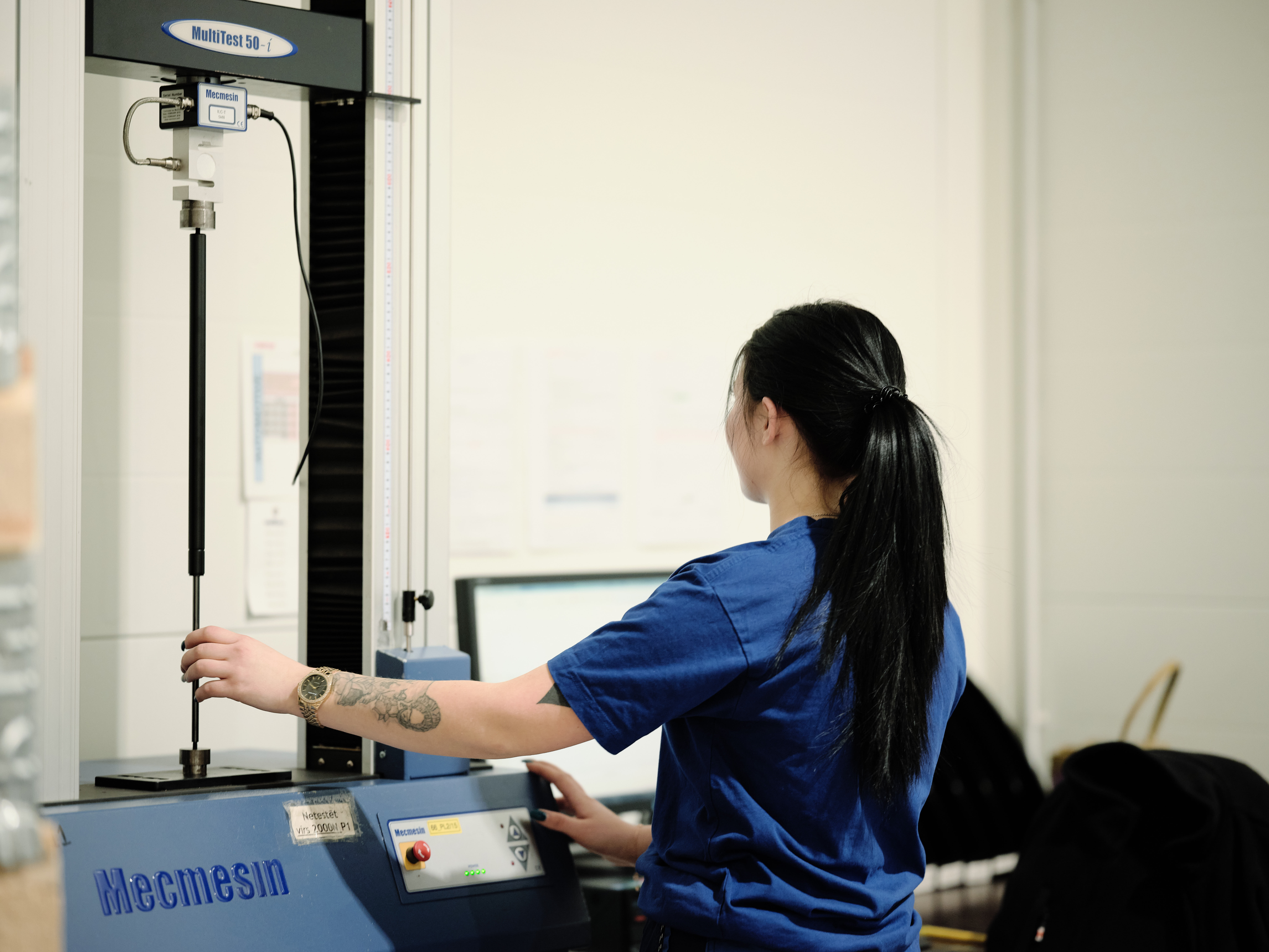
Stress testing
Our fully computerized, calibrated spring load testing systems precisely measure stress, fatigue life, and creep, ensuring your design, materials, and manufacturing methods are fit for purpose.
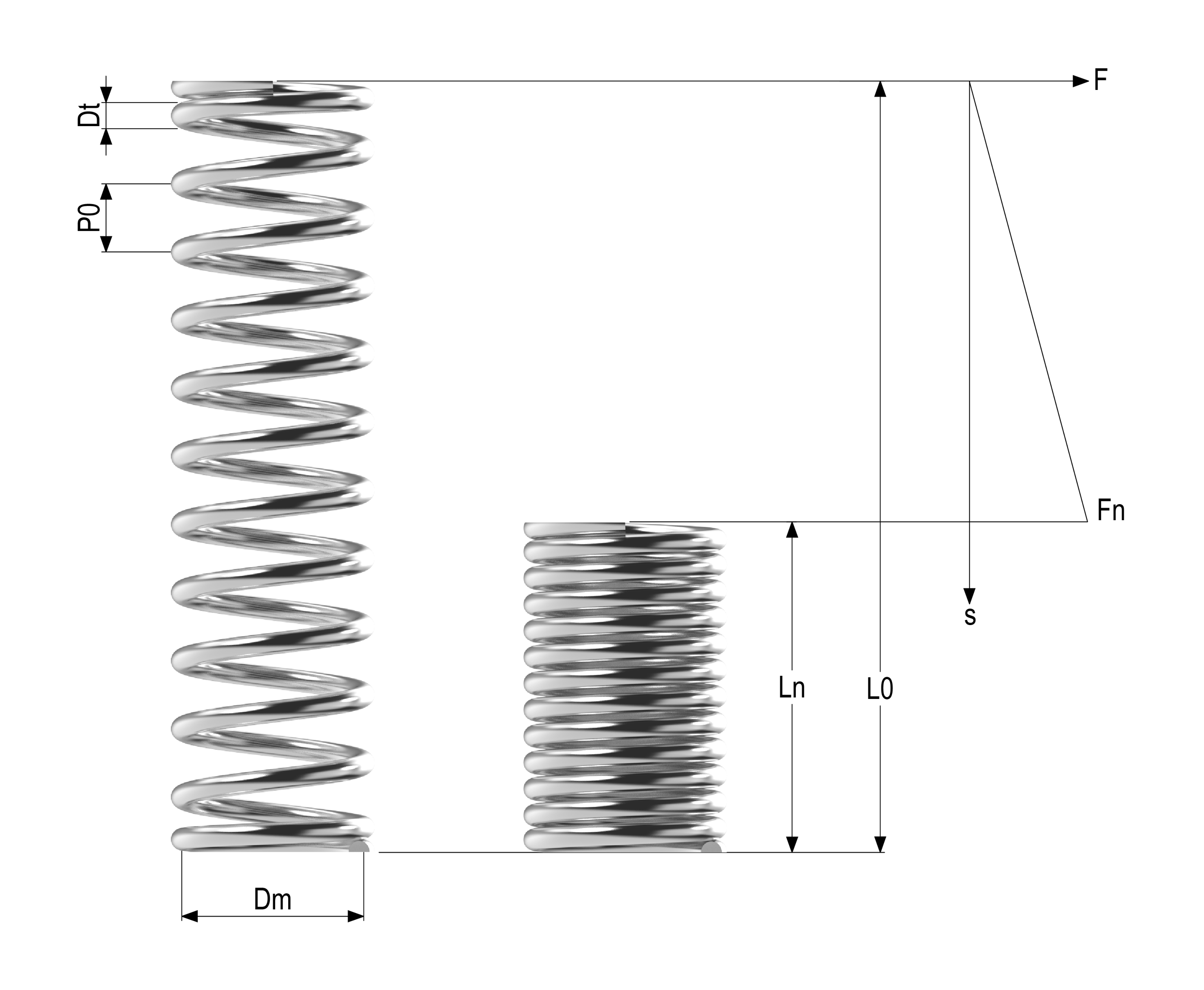
Technical information on springs
Springs belong to one of the main groups of machinery elements, along with fasteners, bearings, and bushings. They are used in countless mechanical systems where components move in relation to one another.
Since this movement is often tied to the primary function of the system, the spring becomes an essential part of its operation.
A spring can take many geometrical shapes. It is a component that deforms elastically under a mechanical load, and the relationship between elastic deformation (deflection) and load is key. This is known as the spring characteristic, or spring rate.
Anyone who has studied mechanics will have come across spring rate in system calculations. Spring technology focuses on the design and manufacture of these components. Each spring must meet strict demands for function, reliability, and service life. At the same time, it needs to be cost and space-efficient.
When a new mechanical system is developed, our engineers define the spring requirements by examining the relationship between load and deformation. The type of spring and its geometry are then chosen based on the available space, reliability needs, and cost.
Some spring types have proven especially efficient for certain functions. Helical coil springs, disc springs, and wave springs are often used for axial compression loads. Each has an optimal force-deflection range that makes it a space-effective solution.
The same applies to rotating deflection. Helical torsion springs have an ideal torque-deflection range. The same is true for spiral torsion springs, torsion bars, and power springs. Each type works best within its own limits.
A spring function can also be built into components of almost any shape. Wire and sheet material can be formed into complex designs, many of which serve more than one purpose. In these cases, the spring function is just one part of the overall role.
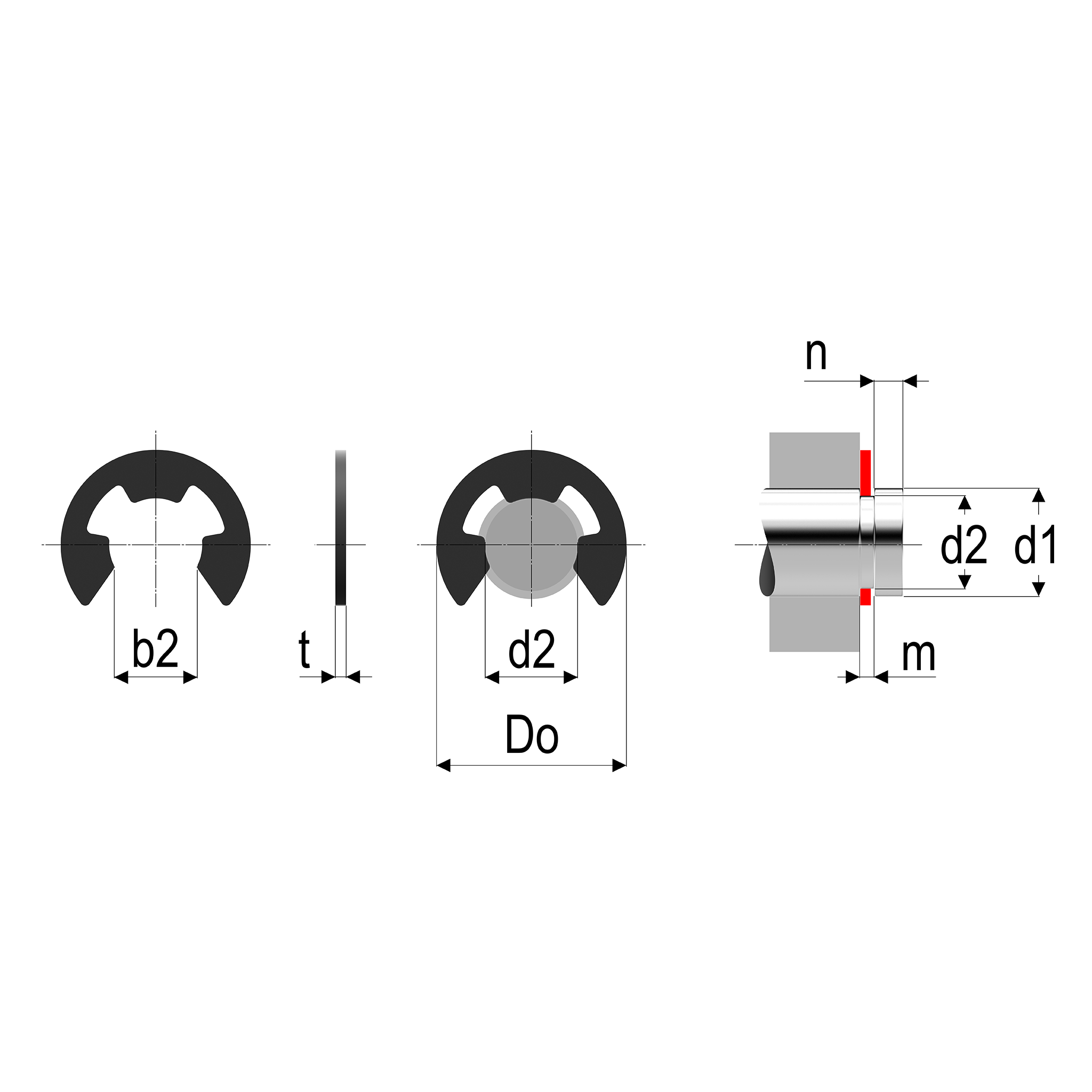
Metal stamping solutions: Stamping technology
At Lesjöfors, we offer an end-to-end service for metal stamping solutions – from initial design concepts to fully assembled, market-ready products. Using high-speed presses and multislide machines, we produce a wide range of structural and non-structural stampings, from load-bearing components to protective and aesthetic parts.
Manufactured from strip, sheet, or wire, our pressings can be formed into virtually any shape through precision cutting and bending, with expert engineering support for even the most complex requirements.
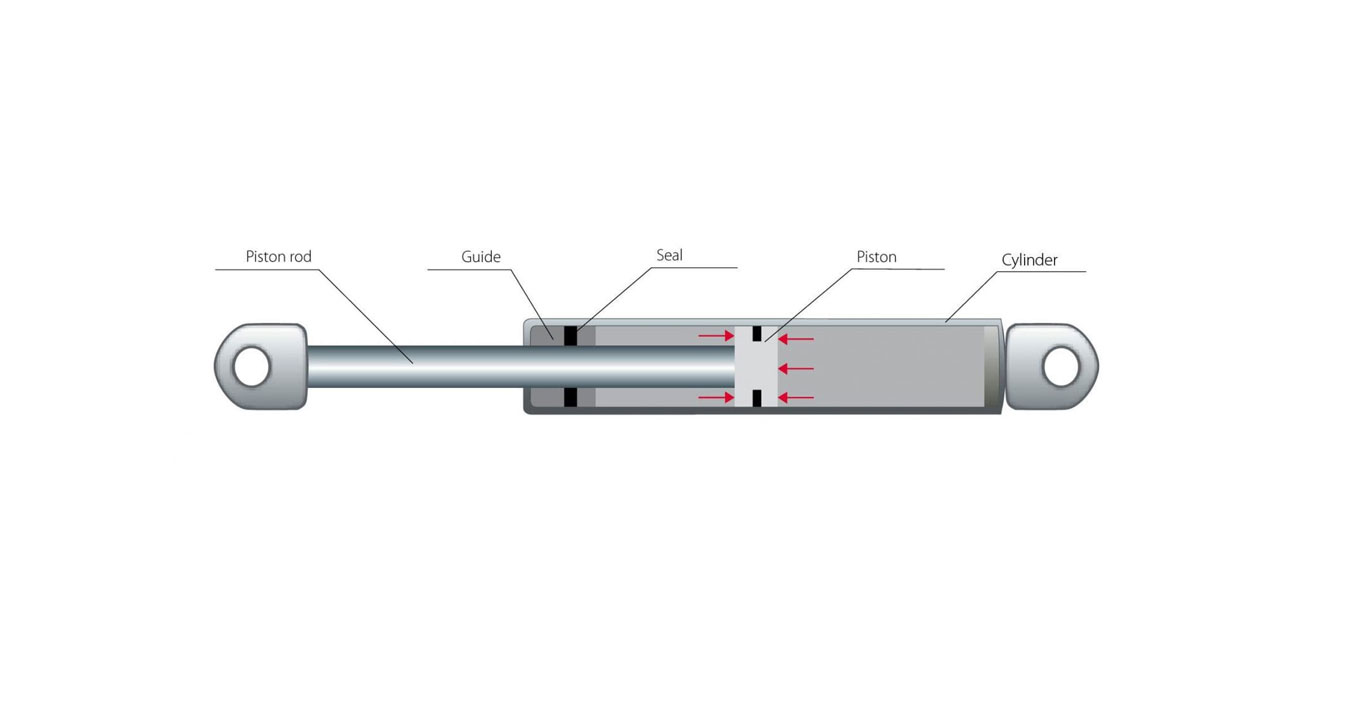
Technical information of gas springs
Gas springs work in the same way as mechanical springs. They are used in applications that need a set relationship between force and deflection. The main components of a gas spring are a cylinder, a piston rod with a piston head, a seal, and a guide.
In simple terms, the driving force in a gas pressure spring comes from two factors. It depends on the cross-sectional area of the gas spring piston rod and the internal pressure inside the cylinder. These values make up the gas spring specification, and engineers use this to choose the right design for each application.
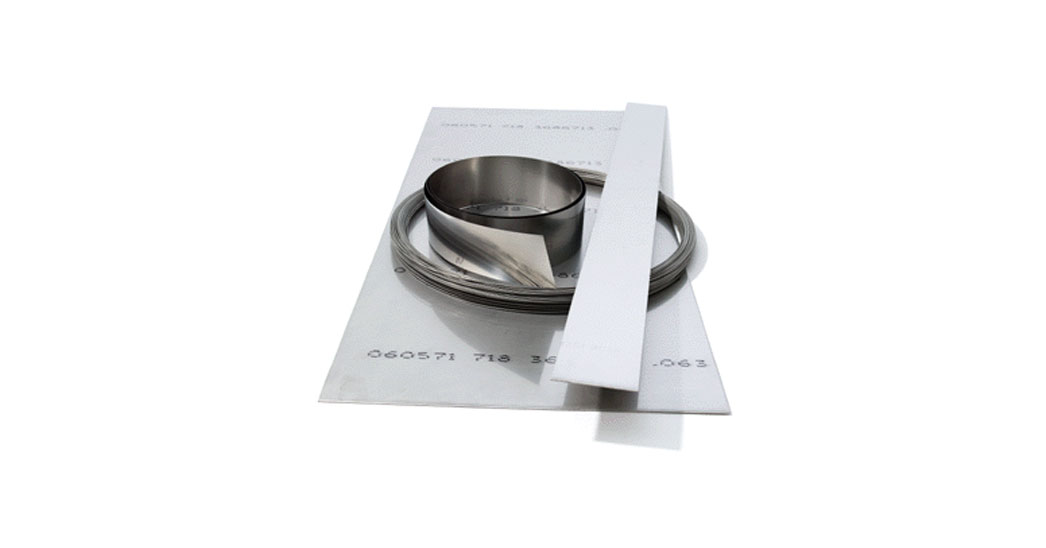
Spring materials
Material selection shapes the performance of every product. Lesjöfors works with a wide range of metals and alloys, sourced through our global supply network to ensure consistent quality, traceability, and reliable availability for projects of any scale.
Our engineers help you find the right balance between performance factors, including strength, fatigue resistance, corrosion protection, and temperature durability. Each material choice is tailored to your specific application, whether for standard designs or custom-engineered solutions.
We work with:
- Carbon and stainless steels
- Copper and titanium alloys
- Aluminum
- Superalloys such as Inconel, Hastelloy, and Nimonic
- Chrome silicon and chrome vanadium, with large global stock availability
At Lesjöfors, you get expert guidance at every stage, covering environmental exposure, mechanical stress, lifecycle expectations, and compliance requirements, ensuring the right material for long-term, reliable performance.
Resources and support
- Learn more about Lesjöfors
About Lesjöfors
- Contact our team of experts
Contact and support
- Explore FAQs and advice
FAQs & technical advice