
Metal Conveyor Belts
Metal conveyor belts are engineered to transport products reliably through high-load, extreme-temperature, or hygienic production environments. Unlike traditional belts, metal belts offer superior durability, dimensional stability, and resistance to wear, corrosion, and extreme operating conditions.
Designed for continuous operation, metal conveyor belts provide consistent performance in industries where precision, cleanliness, and long service life are crucial.
Technical specifications
- Belt types:
Eyelink belts, Balanced weave belts, Compound balanced belts, and Tri-Flex
- Materials:
Stainless steel, carbon steel, and heat-resistant alloys
- Operating conditions:
High temperatures, heavy loads, wet, or corrosive environments
- Design options:
Straight-running or curved belts


What are metal conveyor belts?
Metal conveyor belts are mechanical transport systems made from interconnected metal wires, rods, or plates. They move products through production processes such as heating, cooling, washing, drying, or inspection.
Their open or closed structures allow for excellent airflow, drainage, and easy cleaning, making them ideal for food processing, industrial manufacturing, and thermal applications.

Custom metal conveyor belts
Every production process is different. Custom metal conveyor belts are designed to meet specific requirements such as product size, temperature exposure, load capacity, and conveyor layout.
Working closely with your engineering team, we tailor belt geometry, material selection, and drive systems to ensure optimal performance and long service life.
Types of metal conveyor belts
Different belt constructions serve different operational needs:
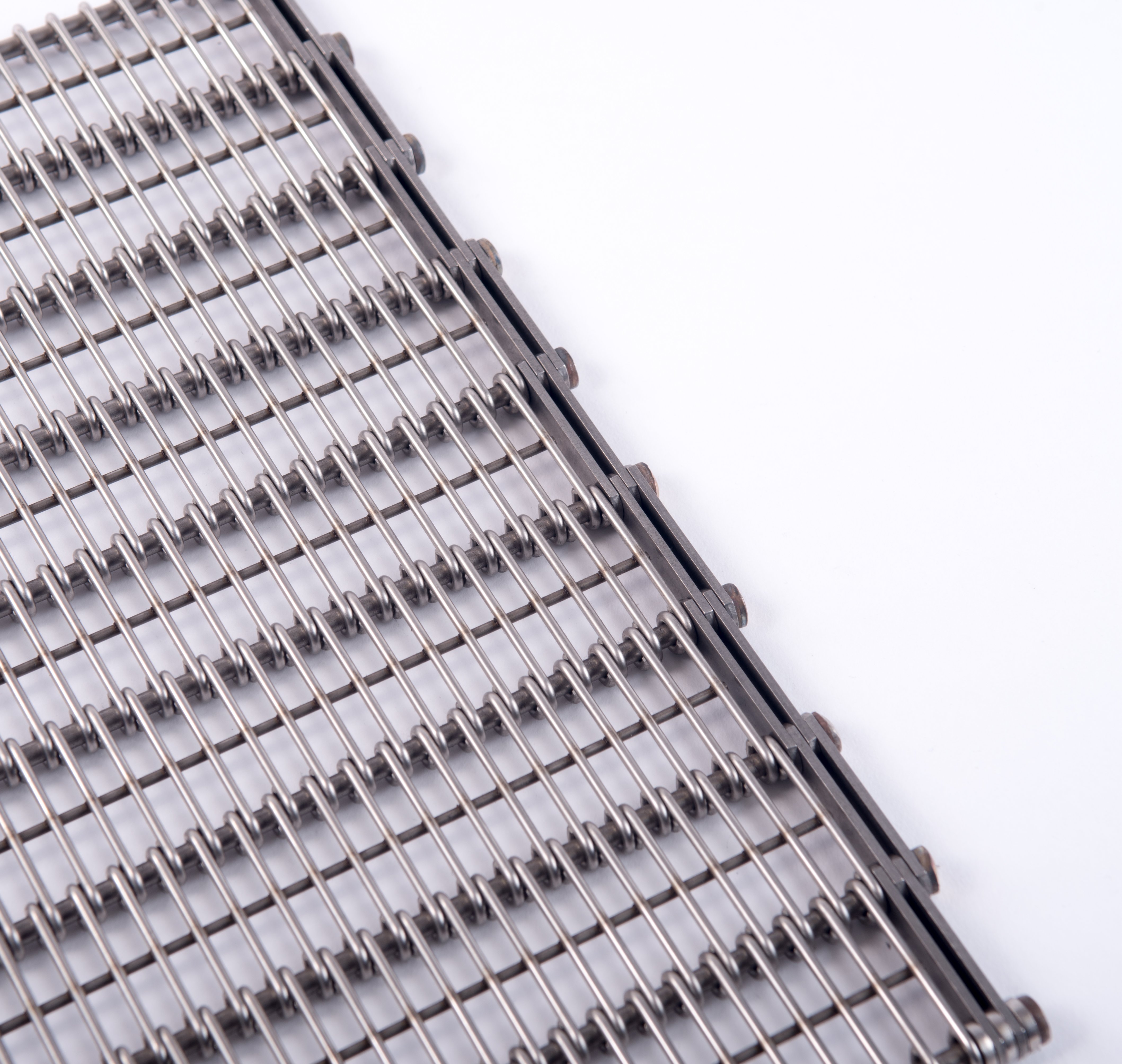
Eyelink belts
Provide a stable, accurate and reliable transport, contributing to optimal product quality and continuity of your production process.

Balanced weave belts
Offer excellent flexibility and strength, ideal for straight-running conveyors with moderate loads.
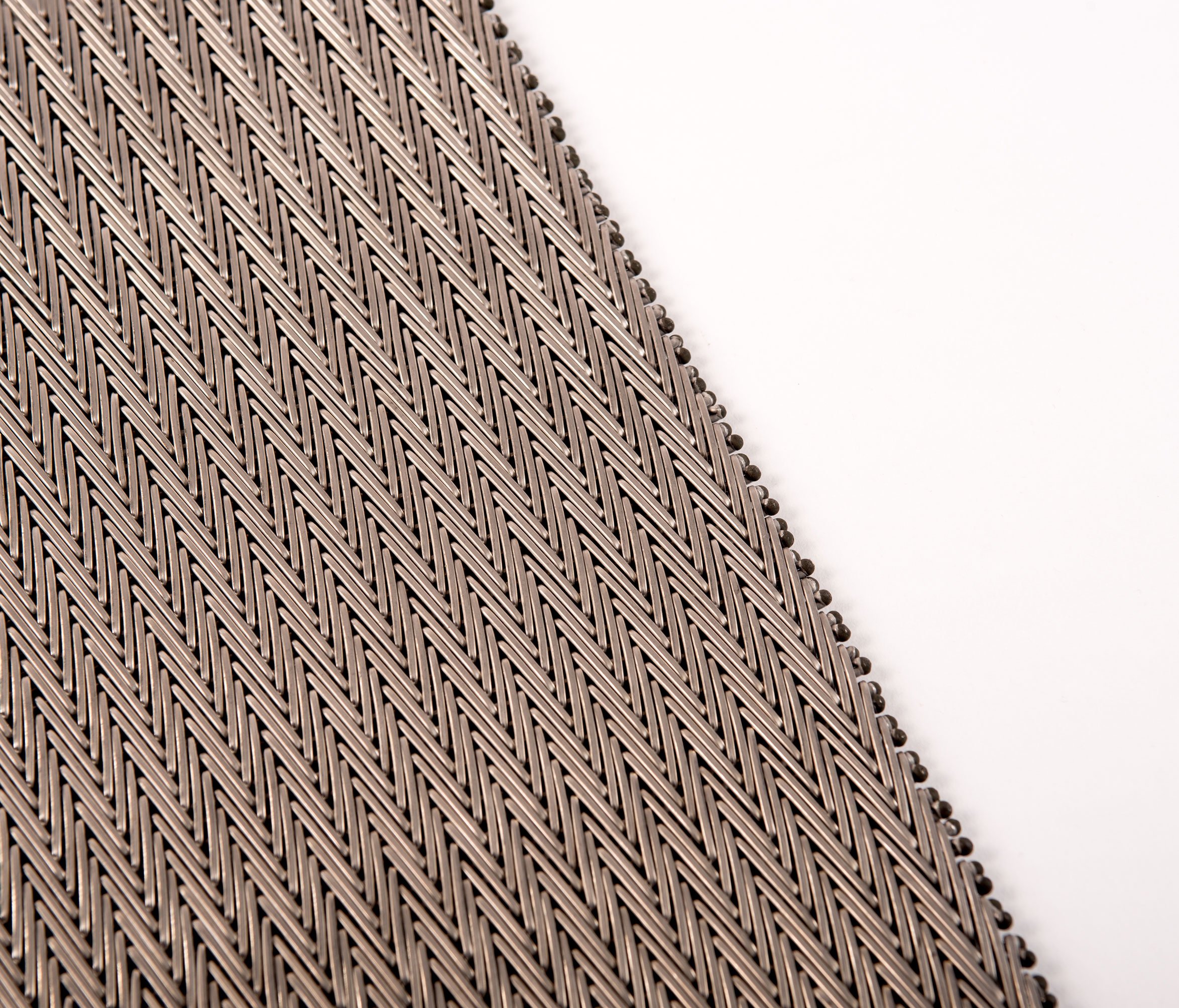
Compound balanced belts
Designed with a dense belt structure for high stability and accurate product guidance.

Tri-Flex
Flexibel conveyor belt for precise cooling, freezing and processing in industrial installations.

Metal conveyor belt designs and materials
Design features influence performance and application suitability:
• Open structures for airflow and hygiene
• Reinforced edges for improved tracking
• Curved belt designs for space-efficient layouts
• Surface finishes for product protection or grip
Material choice is critical for belt performance and lifespan. Common materials include:
• Stainless steel – corrosion resistance and hygiene
• Carbon steel – strength and cost efficiency
• Heat-resistant alloys – high-temperature applications
Material selection depends on operating temperature, chemical exposure, hygiene requirements, and mechanical loads.

Advanced metal conveyor belt manufacturing
Metal conveyor belts are manufactured using precision forming and weaving techniques to ensure consistent geometry and strength. Advanced production processes guarantee accurate belt pitch, smooth operation, and long-term reliability.
Strict quality control ensures that each belt performs reliably, even in continuous, high-stress production environments.
FAQ
Resources and support
- Learn more about Lesjöfors
About Lesjöfors
- Contact our team of experts
Contact and support
- Explore FAQs and advice
FAQs & technical advice