
What is a flat spring? A complete guide to types, materials, and uses
Published: 2026 10 05
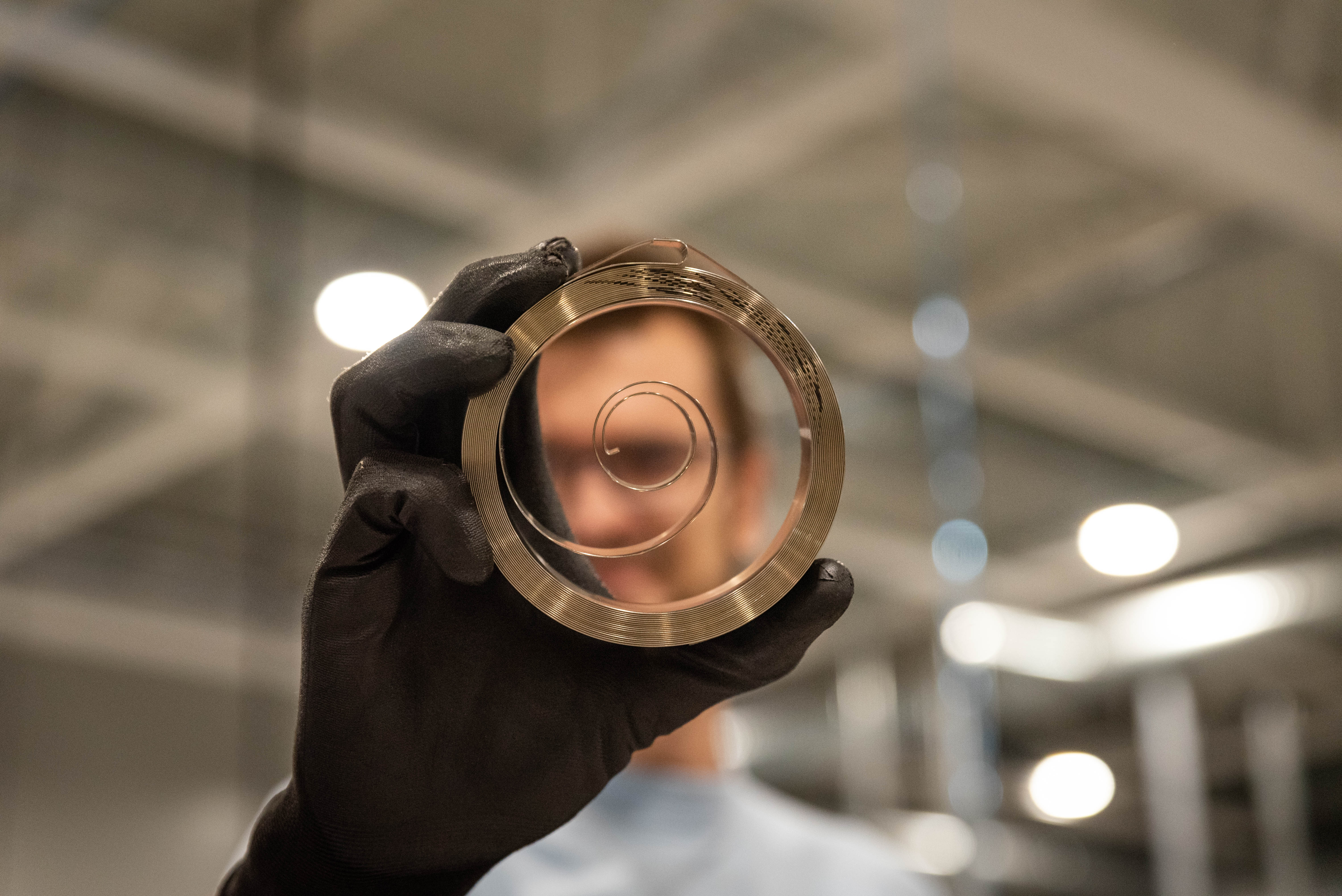
Flat springs deliver controlled force where space is limited. Made from thin strips of spring material, they store energy as they deflect and exert force as they try to return to their original shape.
At Lesjöfors, we've spent over 40 years engineering flat springs that deliver predictable force within a compact footprint. Our capabilities range from constant force springs inside medical devices to leaf springs in commercial vehicles. In this post, we break down what a flat spring is, how the flat spring mechanism works, and where each type performs best.
Types of flat springs
Flat spring types are split into two categories: strip springs wound into a coil, such as constant force and power springs, and strip springs that work as a beam, like leaf spring variants.
Constant force springs
Constant force springs are pre-stressed strips wound tightly on themselves. Their force stays near-flat across the full extension, giving this flat spring type its name. Because of their consistency and reliability, they’re widely used in counterbalance and retraction assemblies, such as hospital beds, window balancers, and cable reels.
Power springs
A power spring is a flat strip coiled around an arbor and held in a housing. Where a constant force spring delivers linear pull, this type of flat spring stores torque when wound and releases it smoothly over many turns. Available in conventional, pre-stressed, and cross-curved variants, power springs are common in seat belt retractors, cord reels, and timers.
Spiral torsion springs
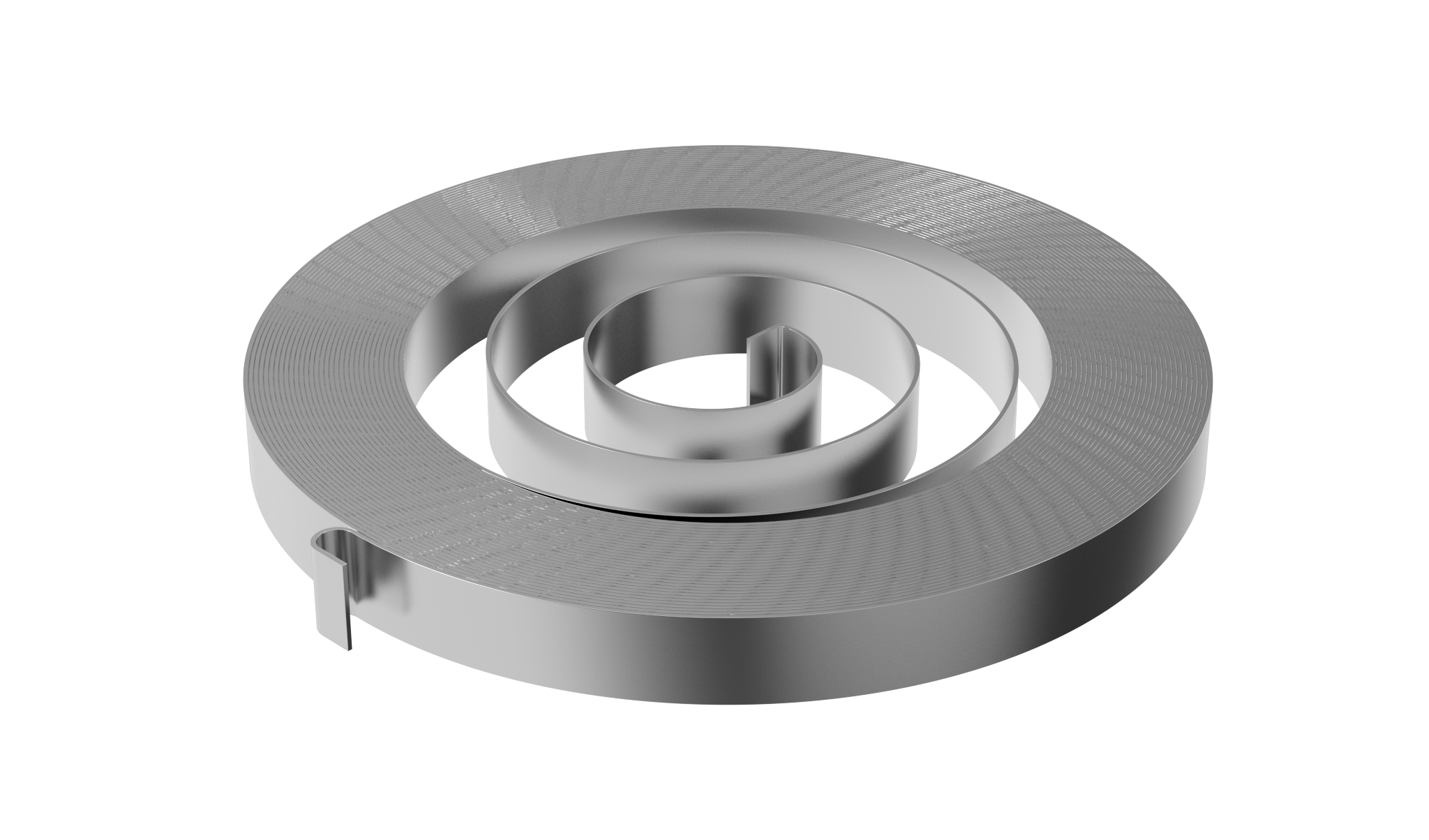
Spiral torsion springs, also known as clock springs, are strips wound into a flat spiral that deliver torque over a limited angle of rotation before returning to position. That controlled, repeatable motion makes them suited to winding, balancing, and return mechanisms across the aerospace, medical, and electronics industries.
Leaf springs
Leaf springs are arched strips of spring steel that support load and absorb shock between two mounting points. They’re common in automotive suspension systems.
Mono-leaf
A single tapered leaf. Lighter, with no interleaf friction and less maintenance, which suits lighter vehicles where weight matters more than maximum load.
Multi-leaf
Graduated leaves stacked together, with friction between them adding damping and raising load capacity. The standard choice for vans, pickups, and trailers carrying variable loads.
Parabolic
Leaves tapered to a parabolic profile, so stress spreads evenly along the length. Fewer leaves and less interleaf friction than a conventional multi-leaf, giving lower weight and better ride quality at the same load rating.
How does a flat spring work? The flat spring mechanism explained
A flat spring works as a beam. Load applied across its length bends the strip, storing energy as elastic strain, and the spring releases that energy as force as it returns toward its original shape. The relationship between deflection and force returned is the load-deflection curve, and it's the defining specification for any flat spring.
Four factors set that curve: material modulus, strip width, free length, and thickness. Thickness dominates – spring rate scales with the cube of it, so a small change in gauge moves the rate sharply. Tight tolerances on incoming strip matter as much as the design itself.
How consistently a spring maintains its force–deflection characteristics over its service life depends on its design, material, manufacturing quality, and the loads and conditions it encounters in use. Controlled bending geometry and precision heat treatment set the final free shape and relieve forming stresses, while surface treatments extend fatigue life and protect against corrosion.
Applications of flat springs
Flat springs span any application that demands reliable force within a tight space. They're specified across the aerospace, defense, and electronics industries, with two of the largest applications for flat springs in the automotive aftermarket and medical sectors.
Automotive aftermarket
Leaf springs carry load and absorb shock in automotive aftermarket suspension systems across 4WD, LCV, and van applications. Elsewhere in the vehicle, power springs drive seat belt retractors and window regulators, while spiral torsion springs return pedals to position.
Medical
Flat springs deliver controlled force at a very small scale in medical devices, including auto-injectors and glucose monitoring systems. Stainless grades maintain performance through repeated sterilization cycles, allowing the spring to return identical force from first actuation to last.
Common materials used for flat springs
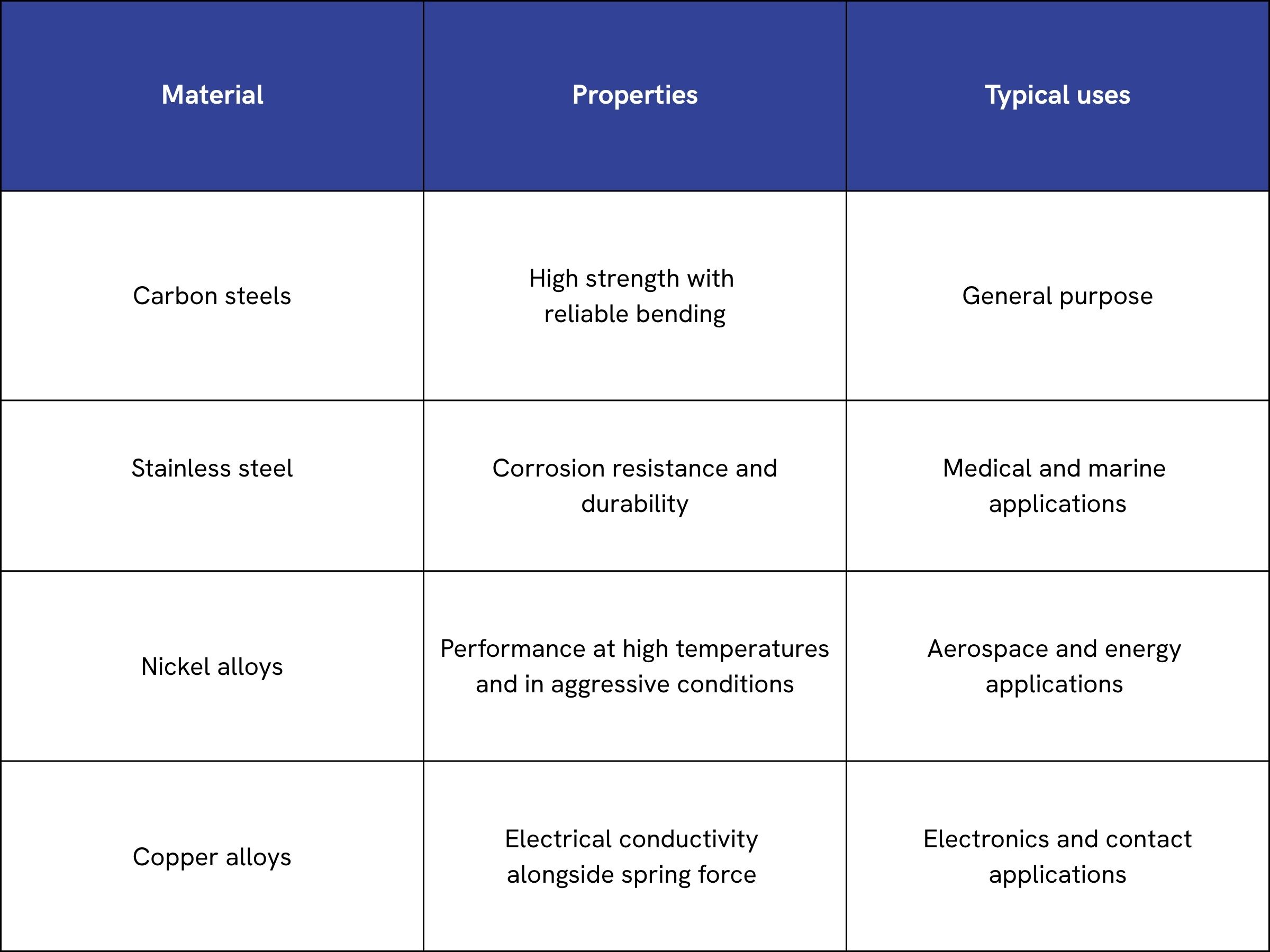
Flat springs are made from carbon steel, stainless steel, and nickel or copper alloys, each selected for the properties an application demands. Surface treatments can also be applied to improve corrosion resistance and fatigue life.
What to consider when choosing flat springs
When selecting a flat spring from stock or designing a custom solution, several factors guide the specification:
- Force and travel required, and whether that force should stay constant or rise with deflection.
- Available space, including deflection clearance and mounting geometry.
- Cycle life target, which determines material choice and permissible stress level.
- Operating environment, including temperature, corrosion risk, and chemical or cleaning exposure.
- Attachment and assembly method, with tolerances on holes and edges.
- Production volume and tooling requirements.
Getting these right at the design stage is cheaper than correcting them at validation, which is why spring manufacturers are worth involving before the geometry is fixed.
Why choose Lesjöfors as your flat spring manufacturer?
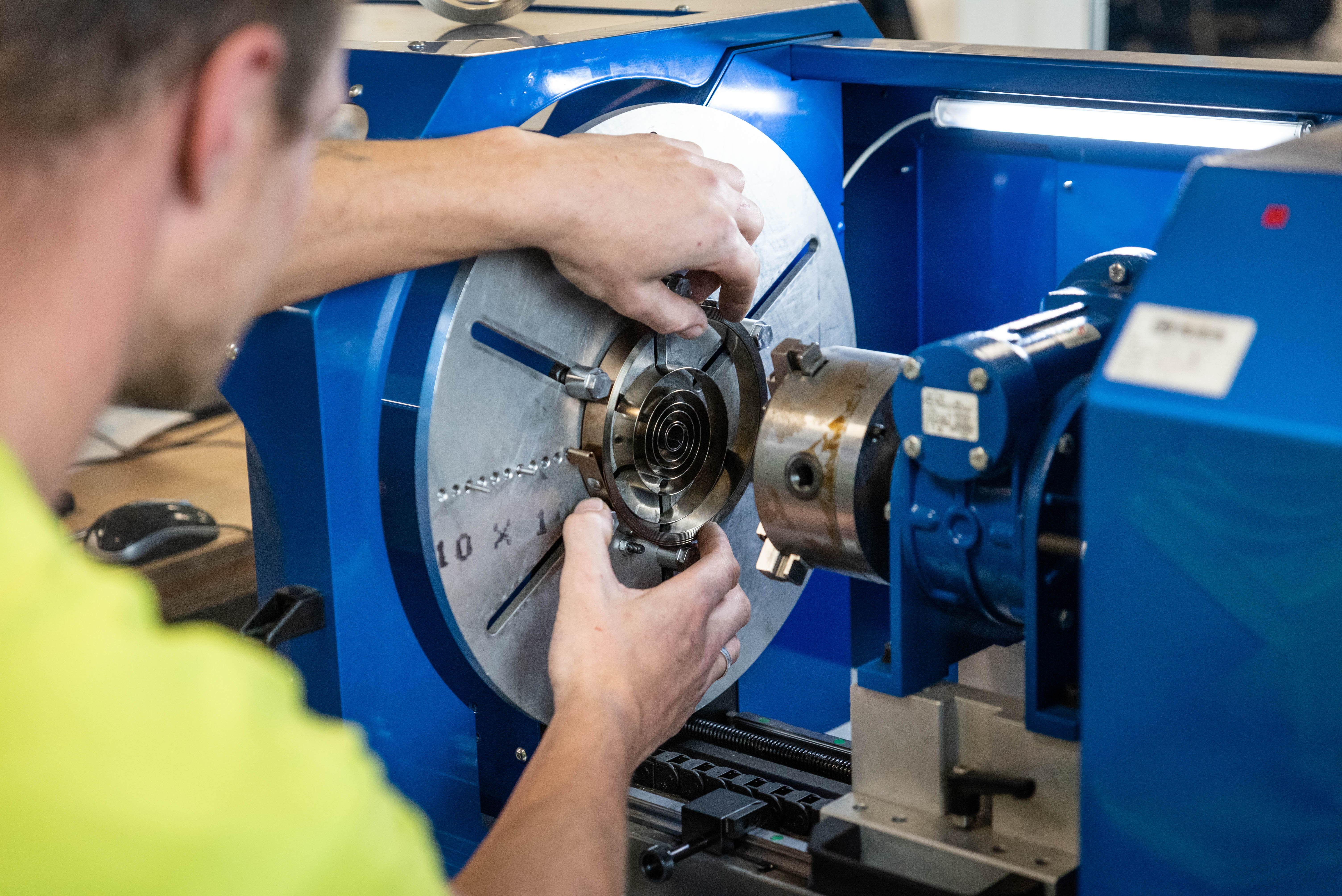
With over 100 years of flat spring expertise, we design and produce to certified global quality systems including ISO 9001, ISO 14001, and ISO 45001. Alongside an extensive stock range, we specialize in custom flat springs matched to your specific force, travel, space, and assembly requirements, with engineering support from concept through prototyping and testing to production. We scale production to suit the order, from manual forming to fully automated lines, without compromising lead time or consistency.
Explore our flat spring range or talk to our engineers about a custom solution.