
What is a bushing? A complete guide to bushing applications & uses in mechanical motion
Published: 2026 06 08
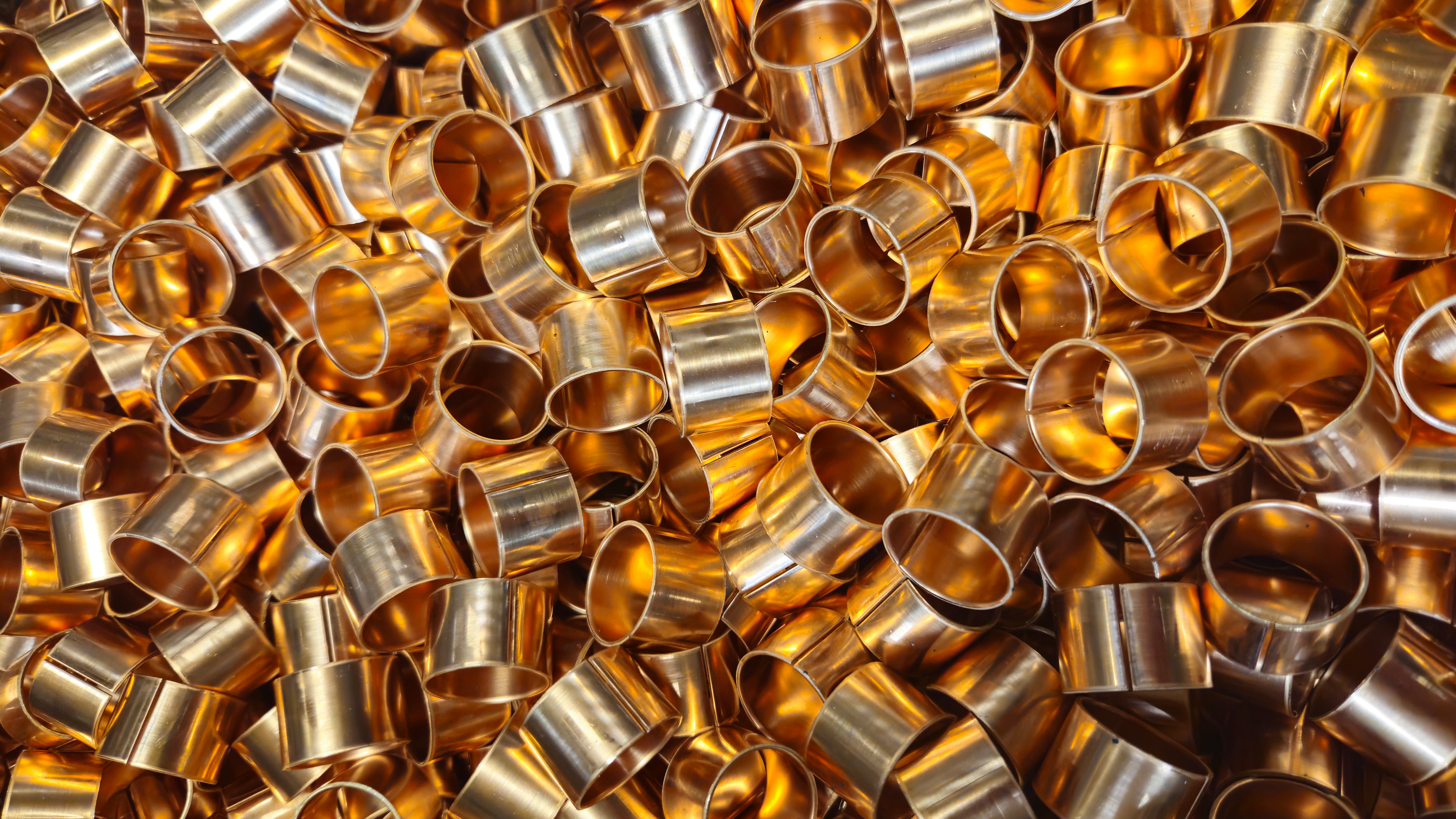
Bushings are one of the most widely used and overlooked components in mechanical engineering. Small, unassuming, and often hidden inside assemblies, they play a critical role in reducing friction, absorbing vibration, reinforcement for screw joints, and protecting the more costly components around them. At Lesjöfors, we manufacture high-precision-engineered bushings as part of our broader pressings and stampings range, supplying customers across automotive, industrial, and precision engineering sectors worldwide. In this guide, we answer the question ‘what is a bushing’, explain how bushings work, the types and materials available, and how to select the right bushing for your application.
What is a bushing?
A bushing (also referred to as a bush, plain bearing or sleeve bearing) is a cylindrical sleeve fitted between two components that move relative to one another, typically a shaft and a housing. Its purpose is to reduce friction, absorb shock, and prevent direct wear between surfaces.
Unlike rolling-element bearings, bushings contain no moving internal parts. Instead, they rely on a thin film of lubricant or on the inherent properties of their material to enable smooth relative motion between the shaft and housing.
Bushings are designed to be sacrificial. Rather than allowing wear to occur on expensive shafts or housings, the bushing absorbs that wear and can be replaced at a fraction of the cost. Dimensional requirements for copper alloy bushings are governed internationally by ISO 4379:2024 , which specifies tolerances for cylindrical and flanged bushes with internal diameters ranging from 6 mm to 200 mm.
How does a bushing work?
A bushing works by creating a controlled bearing surface between two parts that move relative to one another.
In a rotating application, the shaft turns inside the bushing bore. A thin film of lubricant sits between the two surfaces, reducing metal-to-metal contact and minimising heat generation.
In oscillating or linear applications, such as suspension linkages or guide rails, the bushing absorbs lateral loads and keeps movement within a defined path, protecting both the shaft and the housing from premature wear.
Performance depends on three factors working in combination: the dimensional fit between shaft and bore, the material properties of the bushing, and the lubrication strategy.
Bushing vs bearing - what's the difference?
The terms bushing and bearing are frequently used interchangeably, but they are not the same thing.
A bearing is any component that supports and guides a rotating or moving shaft. A bushing, or plain bearing, is one specific type, characterised by its simplicity: a solid sleeve with no rolling elements.
Rolling-element bearings (ball bearings and roller bearings) reduce friction through rolling contact. Bushings reduce friction through a sliding contact surface, relying on material selection and lubrication rather than mechanical rolling.
A bushing is typically the better choice when:
- Space is limited, and a slim profile is required
- The application involves high vibration or shock loading, where rolling elements may fail prematurely
- Quiet operation is a priority
- The environment is dirty or contaminated, making rolling element protection difficult
- Low cost and straightforward replacement are important
- Operating speeds are low, and loads are high
Types of Bushings
Bushings are produced in several configurations, each suited to different load directions and installation requirements.
Cylindrical (Plain) Bushings
The most common type. A simple hollow cylinder pressed into a housing bore, providing a bearing surface for a rotating or oscillating shaft. Cylindrical bushings are used across virtually every industry and are available in a wide range of standard sizes.
Spherical Bushings
Spherical bushings are designed with a curved inner surface that allows for angular movement in multiple directions, enabling them to absorb misalignment and shock loads that would cause a standard cylindrical bushing to fail prematurely. This makes them a critical component in suspension systems and steering linkages, where joints must accommodate non-linear motion and dynamic forces across a range of operating angles.
Flanged Bushings
A cylindrical bushing with an integrated flange at one end. The flange acts as an axial stop, preventing the bushing from being pushed through the housing, and provides an additional bearing surface for axial loads. Flanged bushings are commonly specified where the shaft experiences both radial and axial forces.
Split Bushings
A bushing split along its length, allowing installation and removal without disassembling the shaft or housing. Particularly useful in maintenance-intensive applications or where access is restricted.
Self-Lubricating Bushings
Engineered to operate without an external grease or oil supply. Typically made from sintered bronze (which holds oil within its porous structure), PTFE-lined metal composites, or polymer materials with built-in lubricants. Self-lubricating bushings are well suited to inaccessible locations, food-grade environments, or applications where maintenance intervals need to be extended.
Grooved Bushings
Grooved bushings feature internal grooves machined into the bearing surface, designed to distribute lubricant evenly across the full contact area during operation. This makes them particularly well-suited to heavy machinery and demanding environments where consistent lubrication is critical.
Thrust Bushings & Washers
Thrust bushings and washers are engineered specifically to manage axial loads. Commonly found in gearboxes, rotating assemblies, and power transmission systems, they prevent unwanted axial shaft movement, maintaining stability and precision in applications where positional control is essential.
Bushing Applications By Industry
Bushings are found across virtually every sector of mechanical engineering:
Automotive and Transportation
Suspension bushings are typically made from rubber or polyurethane and absorb road vibration, controlling the movement of control arms, sway bars, and subframes, which contributes to both ride comfort and handling precision. Suspension bushings act as shock absorbers to ease noise and vibration for passengers, whilst ensuring smooth operation of the vehicle.
Bushings are also used in steering systems, driveshafts, engine mounts, and gearbox linkages. Our guide to vehicle suspension springs covers how bushings work alongside spring components in the broader suspension system.
Industrial Machinery And Manufacturing
In industrial machinery, bushings support rotating shafts in pumps, gearboxes, conveyor systems, and printing presses. They are specified wherever a compact, reliable, and low-maintenance bearing solution is needed. High-load applications in this sector frequently call for bronze or composite bushings rated for significant radial forces. Our what is metal stamping article explains how bushings and other pressed components are manufactured to the tolerances these applications demand.
Electronics And Precision Equipment
Miniature bushings are used in precision instruments, robotics, and medical devices where dimensional accuracy and smooth motion are critical. Polymer or PTFE-lined bushings are often preferred in these applications for their low friction and non-magnetic properties. Our work in precision metal stamping for the electronics industry gives more context on the tolerances involved.
Agricultural Equipment
Agricultural machinery operates in harsh, contaminated environments with high vibration and shock loading. High-performance bushings used in ploughs, harvesters, and hydraulic linkages must resist ingress of dirt, moisture, and crop debris while maintaining reliable performance across extended maintenance intervals. Our agriculture springs guide covers the broader challenge of specifying components for this sector.
Fluid Power And Hydraulics
In hydraulic cylinders and pneumatic actuators, bushings guide piston rods and prevent lateral loading from causing premature seal wear. Bronze and composite bushings are widely used here for their ability to handle both radial loads and side forces under high operating pressures. See our hydraulics industry page for more on the components Lesjöfors supplies to this sector, and our guide to how a hydraulic valve works for further context on the operating environment.
Bushing Materials
Material selection is one of the most important decisions in bushing specification. The right choice depends on load, speed, temperature, lubrication availability, and the conditions of the operating environment. The ASM International handbook on tribology is a widely used reference for material behaviour under sliding contact conditions.
Bronze And Copper Alloy Bushings
Bronze is one of the most widely used bushing materials, valued for its combination of strength, wear resistance, and compatibility with a broad range of shaft materials.
Sintered bronze bushings are self-lubricating, making them a practical choice where ongoing maintenance access is limited. Solid bronze bushings are used in high-load, moderate-speed applications across industrial, hydraulic, and automotive sectors.
Lesjöfors manufactures precision-engineered bronze bushings in cylindrical, straight, and flanged configurations, with custom surface coatings available for demanding applications. Dimensional standards for copper alloy bushings are set out in ISO 4379:2024.
Steel Bushings
Specified where maximum load-bearing capacity is required. Steel bushings are often used with an internal lining material to combine structural strength with a low-friction bearing surface. Hardened steel bushings are common in heavy industrial and off-highway vehicle applications. For context on the heat treatment processes that influence steel component performance, see our guide to heat treatment for spring steel.
Polymer And Plastic Bushings
Thermoplastic bushings (including nylon, acetal, and PEEK) offer low weight, corrosion resistance, and self-lubrication. They are suited to light-load applications, food processing environments where metal contamination is a concern, and situations requiring electrical or thermal insulation.
Note: Polymer and plastic bushings are included here for reference. Lesjöfors specialises in metal bushings.
Rubber And Composite Bushings
Rubber bushings are designed primarily to isolate vibration and absorb shock rather than to support rotational loads. They are fundamental to automotive suspension systems and widely used in industrial anti-vibration mounts. Composite bushings combine metal backings with PTFE or polymer linings and offer the structural strength of metal with the low-friction surface properties of a polymer. The European Association of Automotive Suppliers (CLEPA) provides useful industry context on component standards across the automotive supply chain.
How To Select The Right Bushing
Selecting the right bushing requires balancing several interrelated factors.
- Load type and magnitude: Radial loads (perpendicular to the shaft axis) and axial loads place different demands on the bushing. Flanged designs handle combined loading; cylindrical bushings are optimised for radial loads.
- Speed: The PV value (pressure × velocity) is the key parameter for bushing selection. Higher surface speeds generate more heat; both the material and lubrication system must be matched accordingly.
- Temperature range: Operating temperature affects dimensional stability and lubricant viscosity. Extreme temperatures may require specialist alloys or PTFE-based materials.
- Lubrication: Where a continuous oil or grease supply is available, a wide range of materials is viable. Where lubrication is limited or unavailable, self-lubricating materials are essential.
- Environmental conditions: Exposure to moisture, chemicals, abrasive particles, or high pressures will significantly narrow viable material options. Bronze and stainless steel perform well in harsh environments; polymer materials offer chemical resistance but may carry lower load limits. Our guide to materials commonly used for manufacturing springs covers how similar environmental factors influence material choice across our product range.
- Fit and dimensional accuracy: Bushings are press-fitted or bonded into housings and require precise dimensional control to achieve correct running clearance on the shaft. Tight tolerances are critical to both performance and longevity. Our design and development services are available to support customers working through complex specification challenges.

Standard Vs Custom Bushings
For the majority of applications, standard stock bushings provide a fast, cost-effective solution. Lesjöfors maintains stock across its global network of sites, with standard cylindrical, straight, and flanged bushings available for immediate dispatch so production schedules are never held up waiting for components. Standard stock can be ordered directly through the Lesjöfors webshop.
Where standard dimensions don't meet the requirements of an application, Lesjöfors' engineering teams can design and manufacture custom bushings to exact specification. Whether the challenge involves an unusual geometry, tight dimensional tolerances, a specific surface coating, or a material requirement driven by extreme operating conditions, Lesjöfors can deliver.
With manufacturing and specialist sites across the world, there is a Lesjöfors bushing specialist local to you - reducing lead times, simplifying logistics, and ensuring direct access to the right technical expertise.
See our global network for site locations and contact details.
Precision-Engineered Bushings From Lesjöfors
Bushings may be small, but the consequences of specifying the wrong one (or fitting a component that cannot meet the demands of the application) can be significant. Getting the material, geometry, and tolerances right from the outset is what separates a reliable assembly from one that fails ahead of schedule.
At Lesjöfors, we manufacture bushings in cylindrical, straight, and flanged configurations, with custom surface coatings and bespoke designs available for applications that fall outside the standard range. Our engineering teams work directly with customers to understand the demands of the application and specify a bushing that performs reliably from day one.