
What is a wave washer? Function, types, and where to use them
Published: 2026 10 02
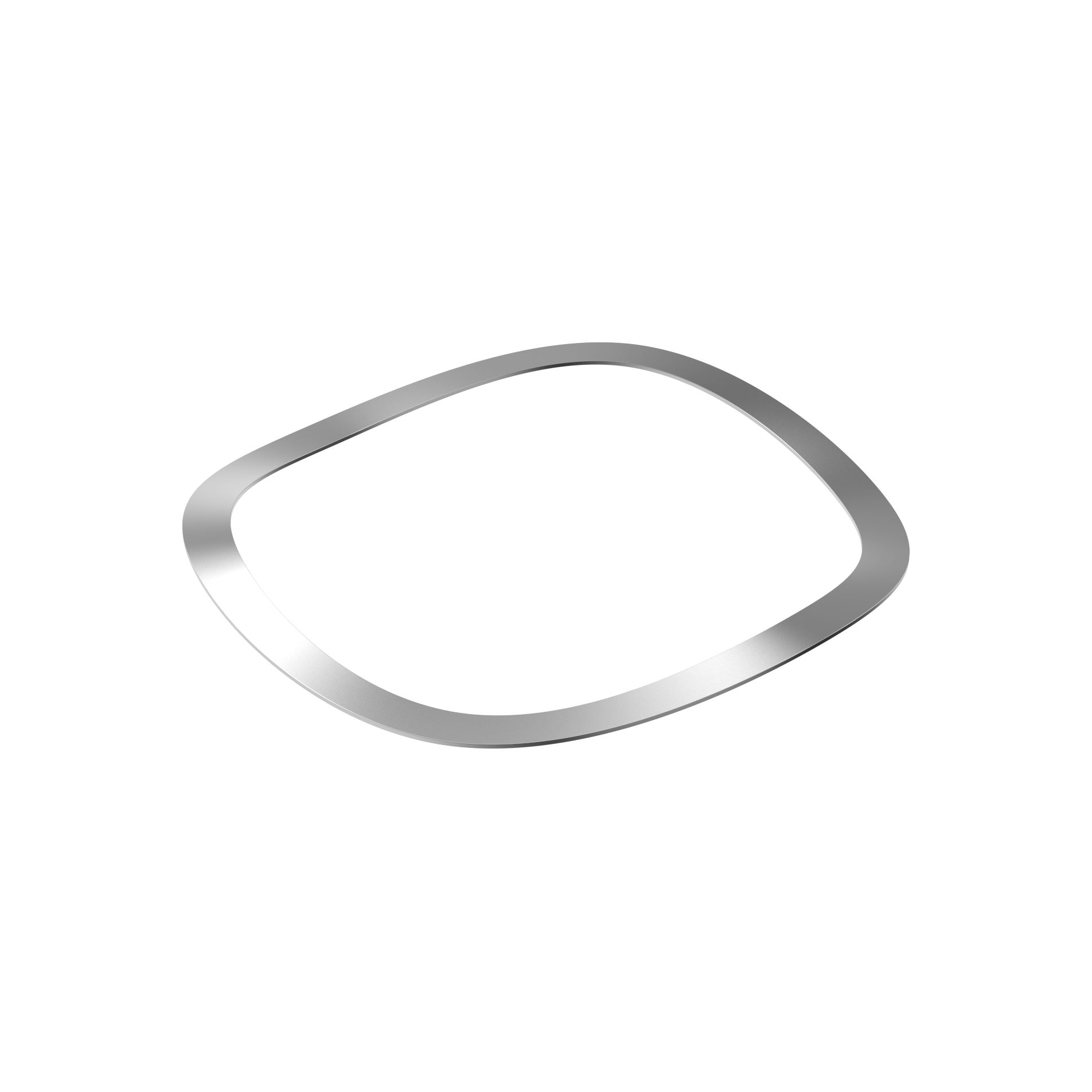
Wave washers may seem like minor components, but they are found in everything from automotive braking systems to electronic switches. They deliver reliable preload, vibration damping, and consistent axial load in spaces too tight for a conventional spring.
At Lesjöfors, we design and manufacture standard and custom wave washers for industries ranging from medical devices to aerospace, solving the load, space, and tolerance challenges that off-the-shelf parts can't always meet.
In this blog, we'll explain what wave washers are, how they work, what they're used for, and how to choose the right one for your application.
What is a wave washer?
A wave washer is a type of spring washer with a wavy, corrugated profile. When compressed between two surfaces, the waves flatten and generate axial force, holding components under consistent load in a small space.
Also known as wave spring washers, they deliver controlled spring action in a fraction of the height a coil spring would need.
How do wave washers work?
Wave washers turn geometry into spring action. In its free state, the crests of a wave washer's waves rest against one surface and the troughs against the other. As the assembly is loaded, the material between each contact point flexes, storing energy and pushing back with a controlled force along the axis of the assembly. Because that force is spread across several evenly spaced contact points, load is applied uniformly around the part rather than concentrated in one place.
Axial load and deflection
As the washer compresses, its axial load increases in a broadly predictable way, allowing engineers to specify the force it will deliver at a given installed height. That load is shaped by a few key design variables. Material thickness has the greatest influence on stiffness, while more waves produce a higher load over a shorter stroke. Wave height determines how much deflection is available, and diameter affects fit and load distribution.
Working height matters just as much. This type of washer should operate within its designed deflection range, rather than being compressed completely flat, which removes its spring action and can lead to permanent set or fatigue over time.
Wave washers vs other spring components
Wave washers are often considered alongside other components. Each suits different load, deflection, and space requirements, so understanding the differences helps engineers make the right choice.
Wave washer vs flat washer
A flat washer simply distributes load across a surface, while a wave variant actively pushes back, so it’s useful in assemblies that need light, controlled preload but lack space for a coil spring.
Wave washer vs wave spring
This type of washer shouldn’t be confused with a wave spring. A washer is a single turn of wavy material, while a wave spring is a multi-turn flat wire spring. Wave springs deliver greater deflection and travel within the same radial footprint, though they have more axial height.
Wave washer vs Belleville washer (disc spring)
Belleville washers, also known as disc springs, use a conical shape to deliver high force over short travel. They’re well suited to greater load applications such as valve actuators and automotive clutches. Wave washers are better for lighter loads that need longer deflection. Learn more about what disc springs are and how they work.
Types of wave washers
At Lesjöfors, we engineer wave washers in several forms to meet different load, space, and precision requirements.
Standard wave washers
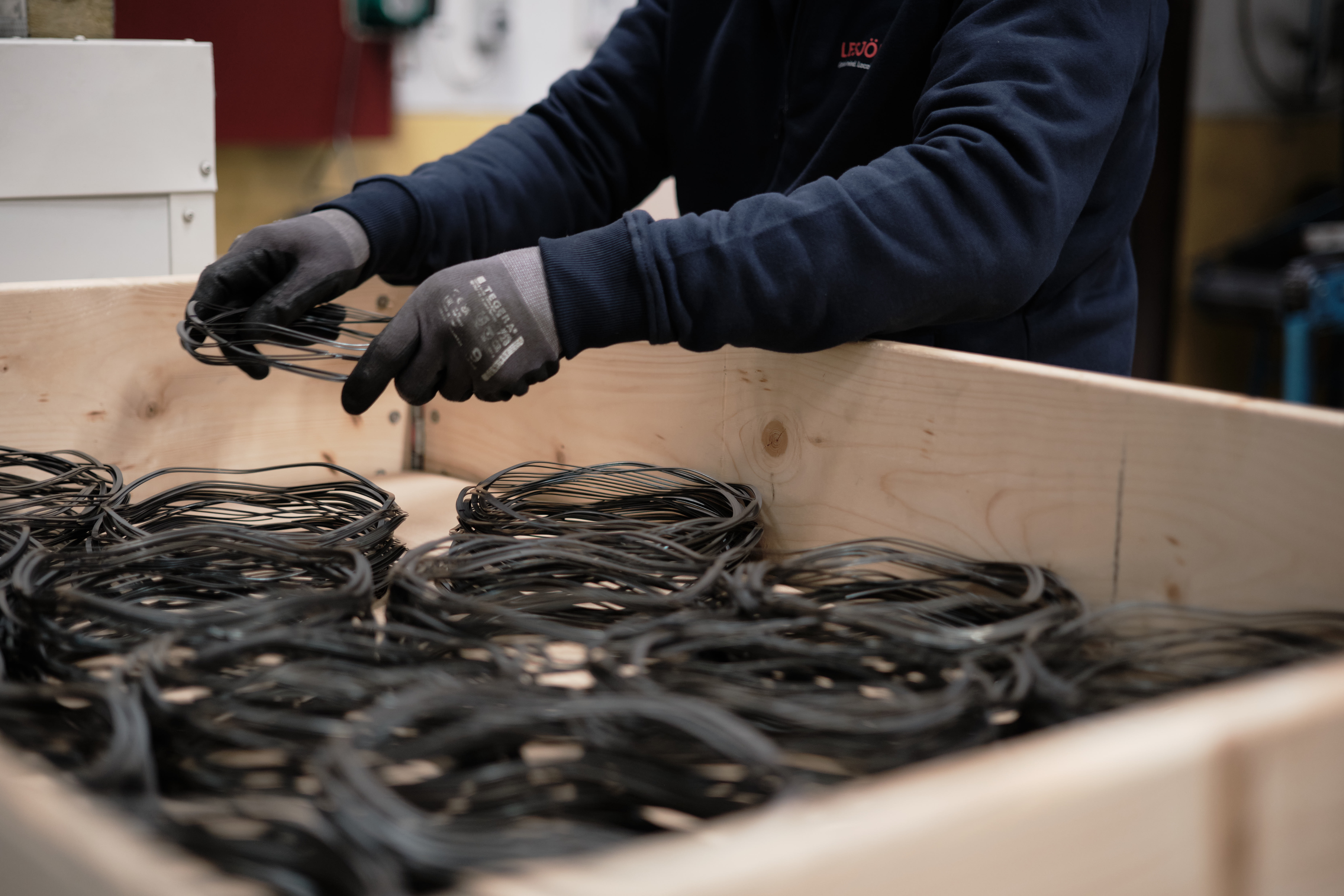
These single-turn wave washers are coiled from flat wire, with an open gap. They provide a compact spring effect, manage axial load, and reduce rattle in tight spaces. They are the most common choice for general assemblies.
Stamped wave washers
Stamped variants are closed rings pressed from sheet metal. Their continuous form gives a uniform fit and highly consistent performance from part to part, which suits high-precision assemblies.
Gallock-wedge lock washers
Although not strictly a wave washer, Gallock-wedge lock washers are often specified alongside them in assemblies exposed to vibration. Each set consists of two identical washers that are pre-glued together, with cams on one side and radial knurling on the other. Because the cam angle is steeper than the thread pitch, any loosening rotation increases clamp tension, which secures the bolted joint through wedge geometry rather than friction alone.
What are wave washers used for?
Wave washers are used to apply light, controlled preload in compact assemblies, reducing vibration and noise, absorbing axial play, and compensating for tolerances and thermal expansion.
Vibration damping and noise reduction
Even a small amount of axial play can cause rattle and premature wear in moving assemblies. By holding components under constant light load, these washers remove that play and reduce vibration. A common wave washer application is to preload bearings. This type of washer keeps the ball bearing seated, reducing noise in electric motors and other rotating assemblies.
Compensating for tolerances and thermal expansion
Manufactured parts aren’t always identical, and small dimensional variations can build up across an assembly. Wave washers absorb these tolerances, keeping components seated under consistent load. The same spring action helps in applications where materials expand and contract with temperature variations. A rigid spacer would lose contact or overload the joint.
Industry applications
These washers are used wherever reliable preload is needed in limited space. In the automotive industry, common applications include engines, transmissions, and braking systems, while in electronics, they provide stable contact pressure in switches and satellite systems. They also feature in medical devices and industrial machinery.
How to choose the right wave washer
Required load
Choosing the right wave washer starts with the space you have and the load you need. Establish the shaft and bore dimensions the washer has to fit, then determine the force required at the installed height. Lesjöfors washers are available in outer diameters from 9 mm to 250 mm.
Open coiled vs closed stamped rings
Next is the type. Open coiled washers suit general applications where you need to reduce noise and absorb tolerance variations. Closed stamped rings provide a more uniform fit and consistent part-to-part performance, so they’re a better fit for high-precision assemblies.
Wave washer material selection
Material is the third consideration. Stainless steel is ideal for corrosive or high-humidity environments, while carbon and alloy steels offer higher load capacity. Surface treatments can be applied to improve corrosion resistance or wear performance.
When you work with Lesjöfors, our engineers help you assess the demands of your application, recommend the right part from our wide range of stock parts or design a custom washer built to your exact specifications.
Wave washers from Lesjöfors
Wave washers may be small components, but getting them right takes an understanding of load, geometry, and material behavior over a product's full service life. With one of the most extensive stock ranges available, state-of-the-art stamping and coiling facilities, and engineers who design to your specific application, Lesjöfors is a trusted supplier of wave washers worldwide.
Browse our wave washer range or contact our engineers to start a custom design.