
From hazardous waste to valuable steel: a UK first for Lesjöfors
Published: 2026 11 19
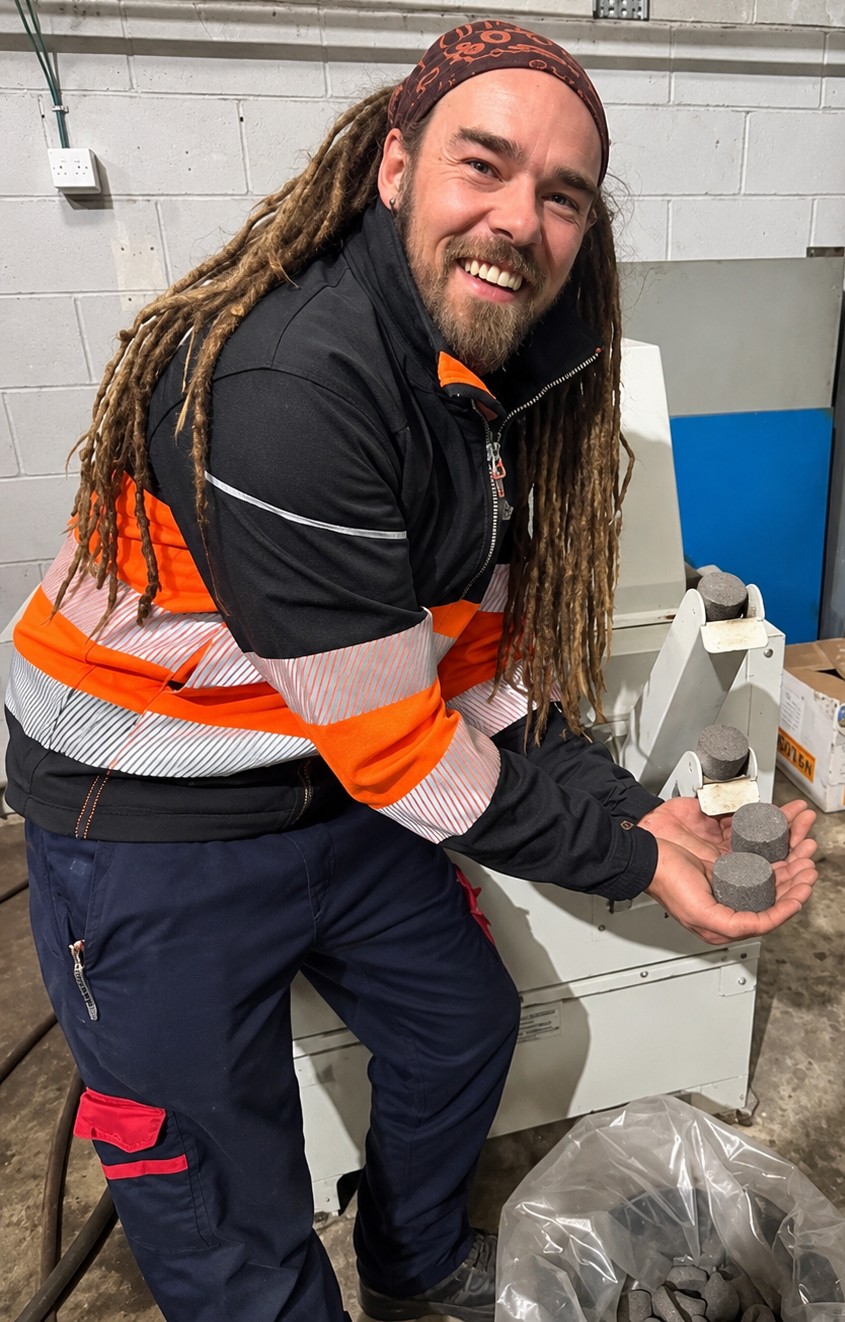
What was once costly hazardous waste at Lesjöfors Heavy Springs UK is now a valuable recyclable material, following the introduction of a pioneering manufacturing solution developed in collaboration with an equipment manufacturer.
In a UK first, the Lesjöfors team in Cornwall has introduced a specialist sludge compactor, adapting the technology to recover steel and coolant from its spring grinding operations.
The results are significant with waste disposal costs falling by 50%, recovered steel is being sold for recycling, coolant is being reused in production and employees benefit from reduced handling of hazardous materials.
Liam Cooper, Health, Safety and Environment Manager at Lesjöfors Heavy Springs UK, explains: “We were paying to dispose of waste that was actually 95% steel. We knew there had to be a better way to manage it, but the challenge was separating the coolant so the metal could be recycled.
Working closely with the manufacturer, we became the first company in the UK to introduce this particular machine and develop the process for our operations. It's rewarding to see the difference it's making, not just environmentally but also in reducing costs and improving working practices. Other UK manufacturers have since adopted the technology, which makes the achievement even more satisfying.”
Turning manufacturing waste into a resource
Spring grinding produces a mixture of steel particles, abrasive material and coolant. Although approximately 95% of this waste is steel, its coolant content previously meant it had to be classified and disposed of as hazardous waste rather than recycled.
The new compactor provides a practical solution. Using a high-pressure hydraulic ram, the machine compresses the steel waste into solid briquettes, known as 'pucks', while extracting the coolant and returning it to the grinding machines for reuse.
With less than 1% coolant remaining, the recovered steel can now be sold to foundries for recycling, returning valuable material to the manufacturing supply chain instead of sending it for hazardous waste disposal.
Measurable environmental and commercial benefits
The project is already delivering tangible results:
- £16,099 reduction in waste disposal costs, falling from £31,589 in 2025 to £15,490 in 2026, despite the machine being out of operation for three months.
- £160 per tonne generated through the sale of recovered steel briquettes as non-hazardous scrap.
- Reduced coolant consumption, with extracted fluid recovered and reused in production.
- Improved workplace safety, with less handling of coolant-contaminated waste.
Beyond the direct financial savings, the process demonstrates how a change in waste management can help manufacturers recover materials, reduce resource consumption and improve working conditions.
For Lesjöfors, projects such as this are an important part of translating wider sustainability ambitions into measurable improvements at manufacturing sites. Alongside the commitment to science-based climate targets through the Science Based Targets initiative (SBTi), practical initiatives focused on resource efficiency, waste reduction and responsible manufacturing demonstrate how environmental progress can be delivered through everyday operational decisions.
Practical innovation with wider potential
For Anna Haesert, Head of Sustainability at Beijer Components, the parent company of Lesjöfors, the project demonstrates how practical improvements at individual manufacturing sites can deliver wider benefits.
“This is exactly the kind of initiative that makes a difference. By turning a challenging waste stream into a valuable resource, our colleagues have reduced costs, improved workplace safety and delivered measurable environmental benefits.
As Lesjöfors works towards its long-term sustainability goals, projects like this demonstrate how practical innovation and collaboration can deliver real progress, with valuable lessons to share for everyone.”