
Spiral torsion spring applications: automotive, aerospace, medical, electronics & more
Publicēts: 2026 08 05

From automotive steering columns to surgical devices and precision electronics, spiral torsion spring applications span an unusually wide range of industries. These compact, spiral-wound components (sometimes called clock springs) store and release rotational energy in a controlled, repeatable way, making them a reliable choice wherever consistent torque is needed within a small footprint.
At Lesjöfors, our 170-year manufacturing legacy has given us deep expertise across these sectors. In this blog, we explore where spiral torsion springs are used, how they perform in each setting, and what to consider when specifying one for your application.
What is a spiral torsion spring?
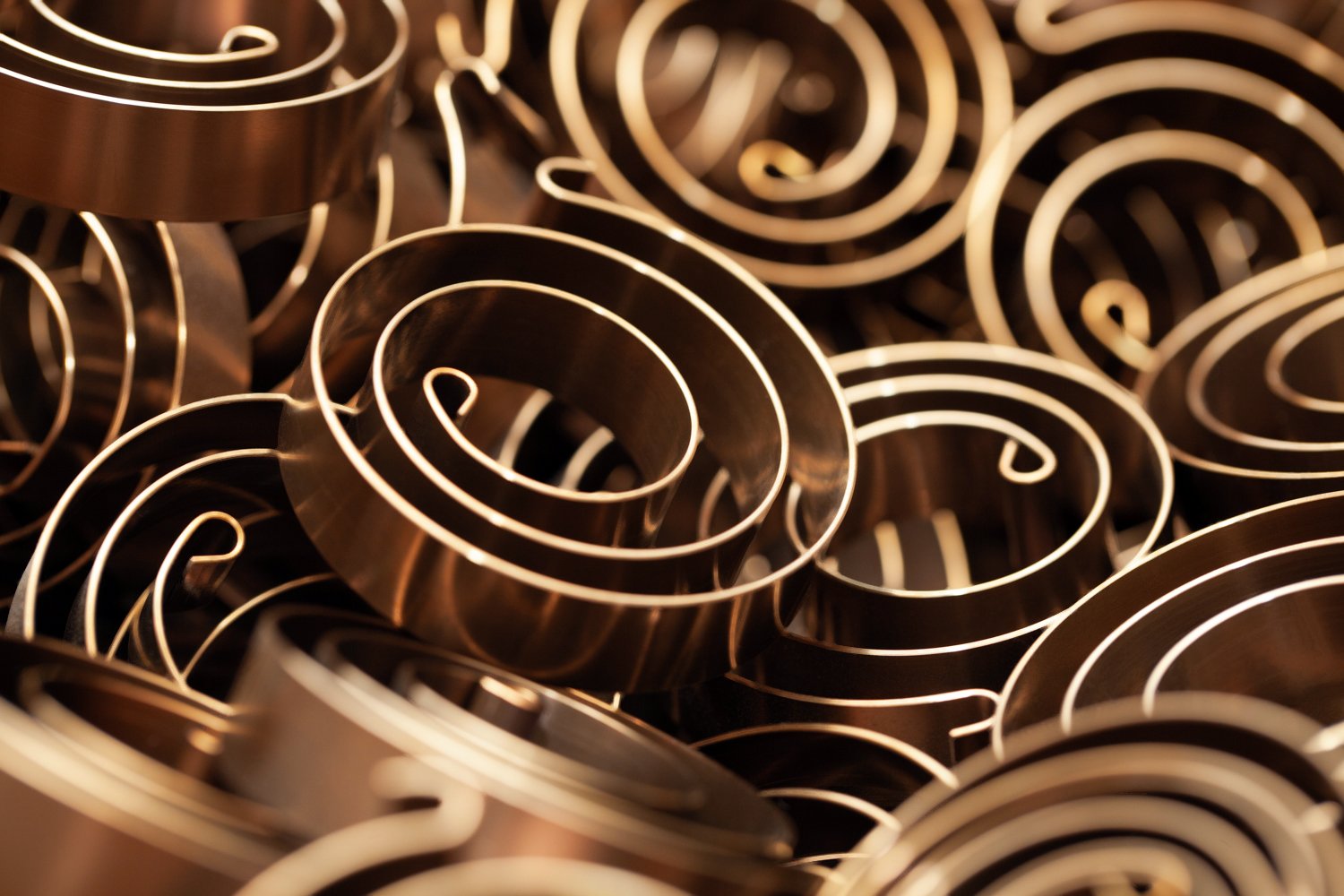
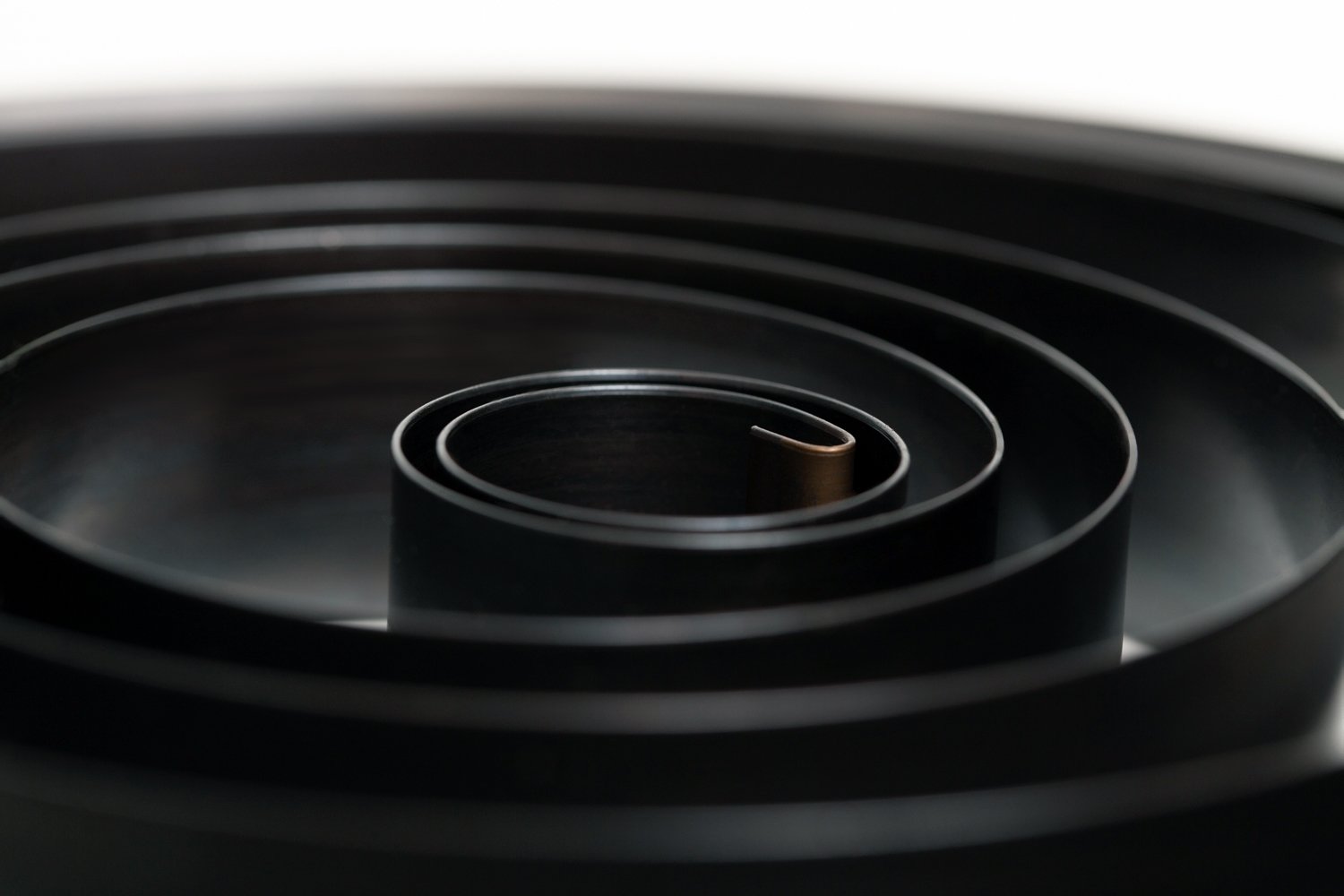
A spiral torsion spring is a flat strip of metal wound into a tight, flat spiral, rather than the round-wire coil most people picture when they think of a spring. That flat, ribbon-like construction is what lets it deliver high torque from a surprisingly small footprint. It's also why the terms ‘spiral torsion spring’ and ‘clock spring’ get used interchangeably (a name borrowed from the mainspring inside a traditional wind-up clock).
One end of the spring is fixed to a central arbour, the other to an outer housing or barrel. As one end rotates relative to the other, the strip winds more tightly around the arbour and stores energy, ready to be released as a smooth, controlled rotational force.
We cover the mechanics of this in more detail in our guide to what a clock spring is and how it works. That combination of compact size and precise torque delivery explains why spiral torsion spring applications turn up in such different settings.
How do spiral torsion springs work?
The working principle is simple, even if the engineering behind it isn't. As the outer end of the spring winds around the fixed arbour, the strip tightens and stores mechanical energy. Release that tension, and the spring unwinds through multiple revolutions, feeding out torque at a steady, predictable rate rather than in a single sharp burst.
Because the coil geometry is open rather than tightly packed, friction between the wraps stays low, which helps the spring perform consistently cycle after cycle. Depending on material, design, and operating conditions, these springs can achieve a life cycle range from several thousand to well over a million cycles.
The torque available depends on how far the spring is wound, the strip's thickness and width, and the material it's made of, which is why spring selection is as much about the application's duty cycle as it is about the available space.
Applications of spiral torsion springs
Automotive applications
Automotive engineering is where most people unknowingly encounter a spiral torsion spring every day, usually without giving it a second thought until something goes wrong.
Clock springs in steering systems
Sitting behind the steering wheel, the automotive clock spring keeps a continuous electrical connection between the rotating wheel and the fixed wiring in the dashboard. Modern steering wheels carry live connections for the driver airbag, the horn, and controls for audio, cruise control, and phone functions, and all of them need to keep working no matter which way the wheel is turned.

In most countries vehicle safety regulations require occupant protection systems, including airbags, to perform reliably in a crash, placing real pressure on every component in that circuit, including the clock spring. A worn or damaged spring is a common cause of an illuminated airbag warning light or unresponsive steering wheel controls, so reliability here isn't optional; it's a safety requirement. To meet that bar, automotive manufacturers specify spiral torsion springs with tight tolerances and long fatigue life, an area we support closely through our automotive OEM work.
Seat recliners, retractors, and interior mechanisms
Away from the steering column, spiral torsion springs quietly handle dozens of smaller jobs inside a vehicle. Seat recliner mechanisms use them for smooth, resistance-controlled movement, seatbelt retractors rely on them to maintain consistent tension, and various interior trim and storage mechanisms use them for self-closing or self-returning motion. These aren't safety-critical in the same way as an airbag circuit, but they still need to perform reliably across the vehicle's service life, which is why Lesjöfors supports both automotive industries and aftermarket manufacturers with matched replacement and custom-engineered springs.
Aerospace applications
Aerospace applications ask more of a component than almost any other industry: extreme temperature swings, vibration, weight constraints, and, in some cases, no possibility of repair once a mission is underway. Spiral torsion springs deliver dependable, high-strength, repeatable torque in this environment without the bulk or complexity of a motorised alternative.
Spiral torsion springs are used in deployment mechanisms, control systems, and precision instrumentation, wherever a compact, self-contained source of rotational force is preferable to added electronics.
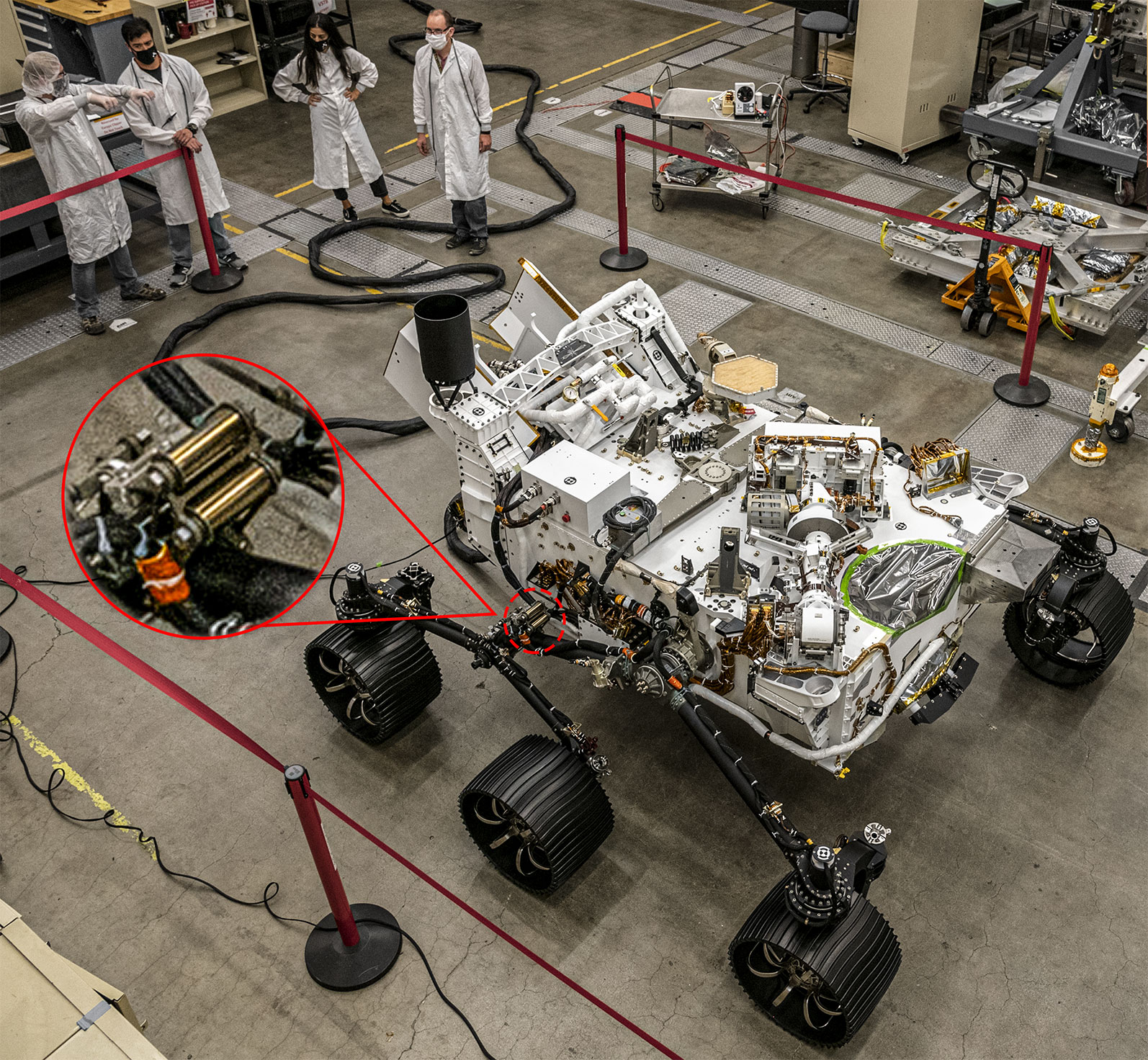
Lesjöfors components have flown as far as Mars, supporting the landing gear system on NASA's Perseverance rover, a project featured in our Mars rover 2020 case study, that used constant force springs. However, spiral torsion springs are also used in aerospace designs where precision rotational energy is required in confined spaces. This project is a good illustration of what's expected of springs in this sector: perform exactly on the first attempt, with no chance of a second try. Explore our full range of aerospace solutions to see how we support the sector more broadly.
Medical device applications
Medical devices are constantly evolving to become both smaller and more dependable. Spiral torsion springs strike that balance perfectly, providing smooth, controlled rotational movement while taking up very little space. Their compact design makes them ideal for handheld surgical instruments, drug delivery systems and diagnostic equipment, where precision, reliability and space efficiency are all essential.
Because they don't rely on a motor, they're often the simpler, lower-cost choice for applications like retractable needle mechanisms, surgical tools, and rotary dials on wearable monitors, where consistent, low-friction motion control matters more than variable speed control.
Springs supplied into this sector are manufactured to support compliance with ISO 13485:2016, the quality standard specific to medical device manufacturing, an important consideration when a component's failure makes it potentially unsafe. Learn more about our work across medical device manufacturing.
Electronics and consumer applications
In electronics and consumer products, spiral torsion springs are the mechanism behind retractable cords, spring-loaded connectors, and rotary assemblies in everything from headphones to camera equipment. A spiral torsion spring holds a surprising amount of usable energy storage in a housing only a few millimetres thick, which matters in devices where every cubic millimetre is already accounted for.
They're also a common choice in consumer hardware that needs to feel good to use: hinges, dials, and retraction mechanisms that need consistent resistance rather than a jarring snap. See more about how we support electronics manufacturers with both stock and custom spring solutions.
Industrial machinery applications
On the factory floor, spiral torsion springs turn up wherever machinery needs controlled rotational return rather than raw linear force.
Cable and hose reels use them to provide constant retraction tension, valve actuators and flow control mechanisms in hydraulic systems rely on them for precise, repeatable movement, and various indexing and positioning mechanisms use them to return components to a home position automatically.
These are demanding in their own way. Industrial equipment often runs continuously, so fatigue resistance and consistent torque output over millions of cycles matter as much as the spring's initial specification. Our hydraulics and energy pages cover more of what we supply into these kinds of industrial settings.
Choosing a spiral torsion spring for your application
With such a wide range of spiral torsion spring applications, there's no single specification that works for every job. A few factors tend to matter most:
- Torque and rotation angle: how much force is needed, and over how many degrees or turns of rotation
- Material: stainless steel, high-tensile spring steel, or speciality alloys like Inconel, depending on the operating environment
- Cycle life: how many times the spring will wind and unwind over its service life
- Space constraints: available diameter and axial thickness, since spiral torsion springs are chosen specifically for tight, flat installation spaces
- Environmental conditions: temperature extremes, moisture, or corrosive exposure that could affect material choice and finish
Getting these details right from the outset avoids premature failure and costly redesigns later.
Custom spiral torsion springs from Lesjöfors
Lesjöfors designs and produces spiral torsion springs for both stock and custom applications, in materials ranging from stainless steel to high-tensile spring steel and speciality alloys. Our engineers work directly with customers to define torque range, rotation angle, material, and mounting style, backed by certified quality systems including ISO 9001, ISO 14001, and ISO 45001, plus ISO 13485 for medical-sector work.
Whether you need a spring from our extensive stock range or a fully custom solution engineered around your application, our team can help specify the right spring for the job.
Explore our full range of spiral torsion springs, or get in touch to discuss your project.